See it in action
Explore what hackers do, how systems respond and what investigators can learn. Browse upcoming demonstrations before subscribing. Illustrative previews are not recorded footage; videos are released only after approval.
53 demonstrations
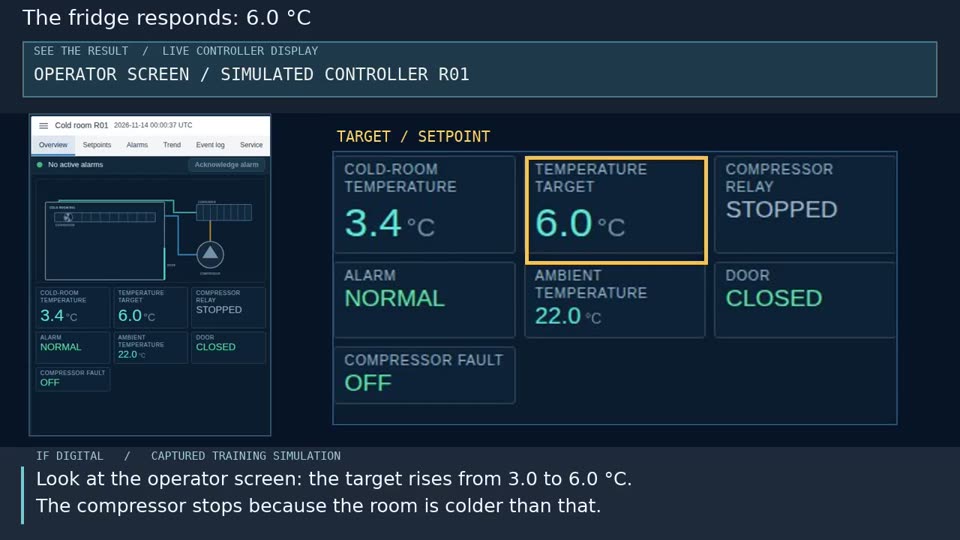
Dave changes a cold store's temperature from his laptop
See a refrigeration controller’s temperature target changed remotely and examine the records it leaves.
Watch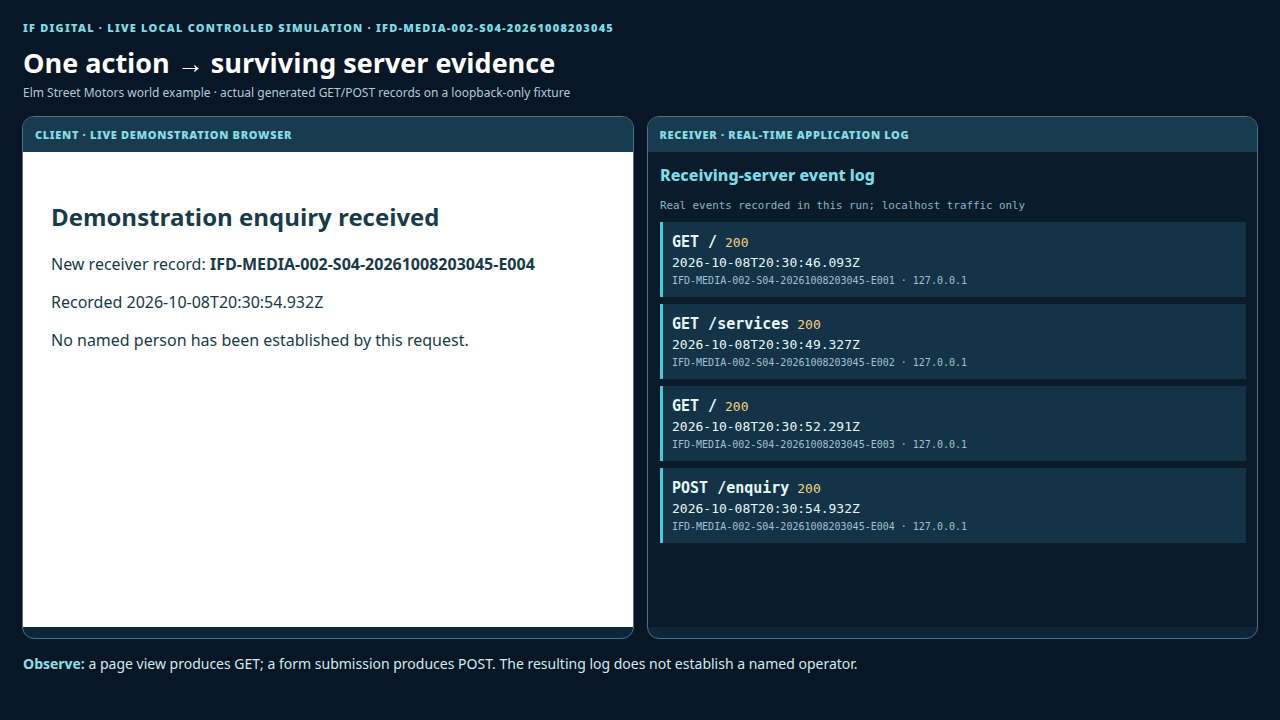
One web request, and the record it leaves on the server
Follow a web request from the visitor’s browser to the matching entry in the server log.
Watch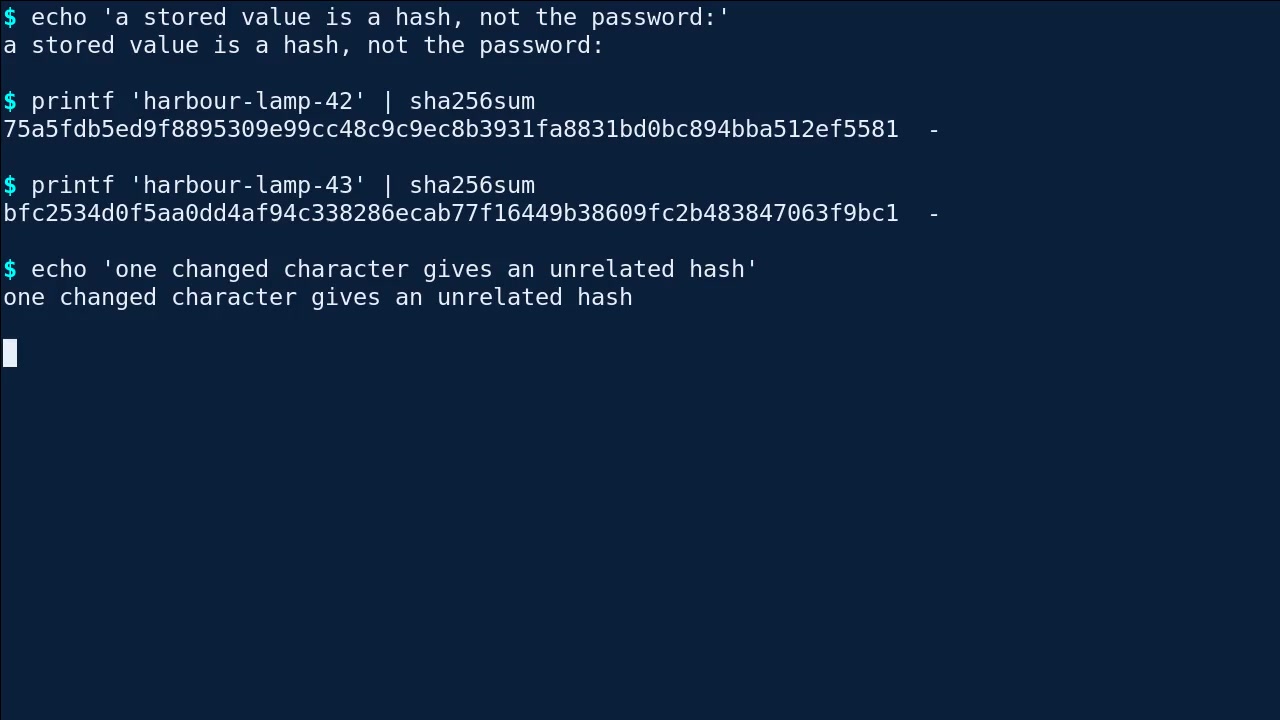
Password cracking
See how a password hash can be tested against candidate passwords.
See what you will learn →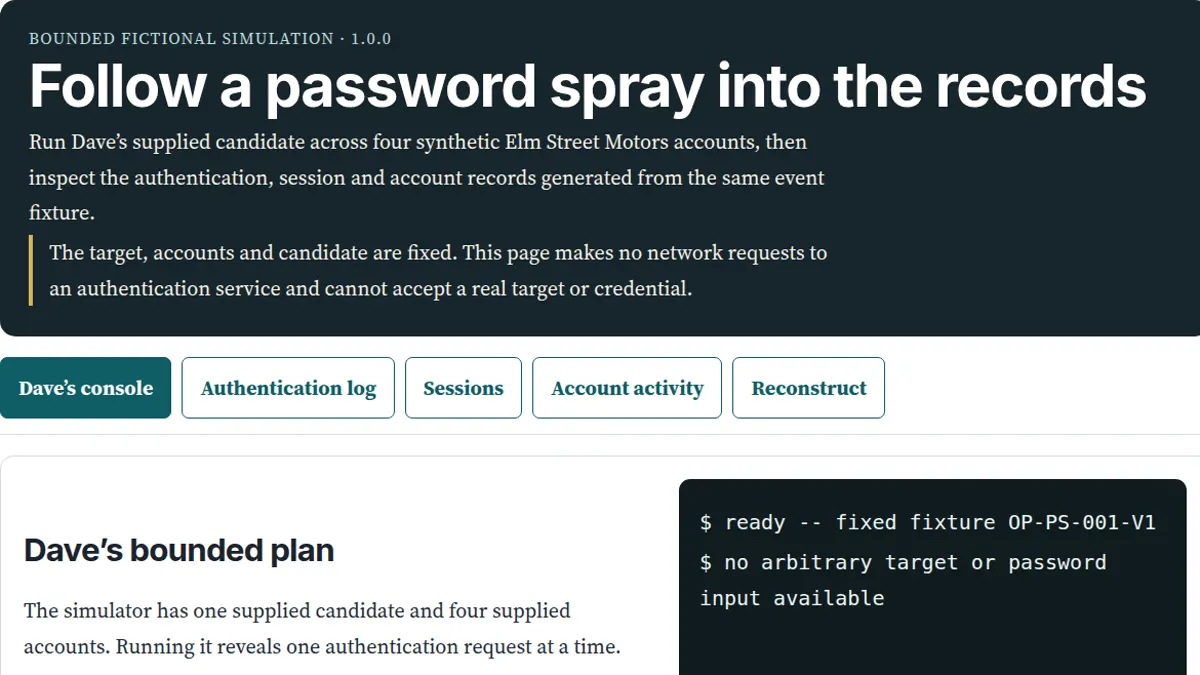
Password spraying
Understand how one common password is tried across several accounts.
See what you will learn →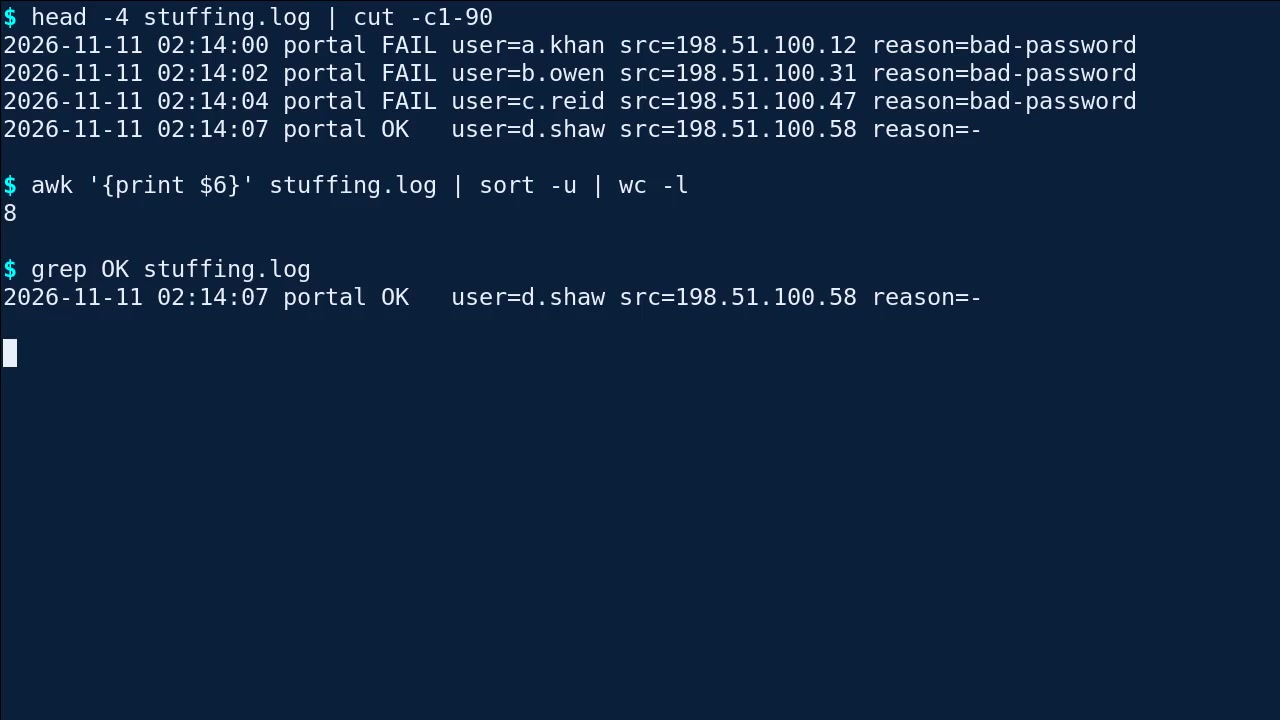
Credential stuffing
See how reused login details can expose another service.
See what you will learn →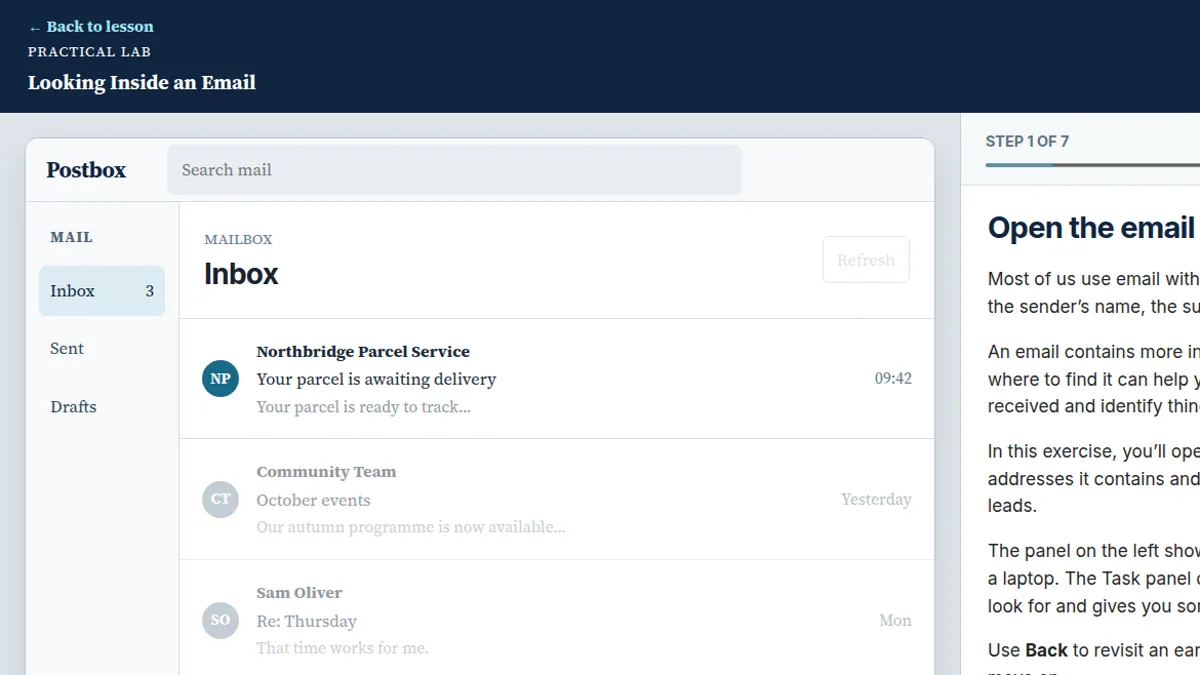
Phishing email
Follow a deceptive email from arrival to the first suspicious click.
See what you will learn →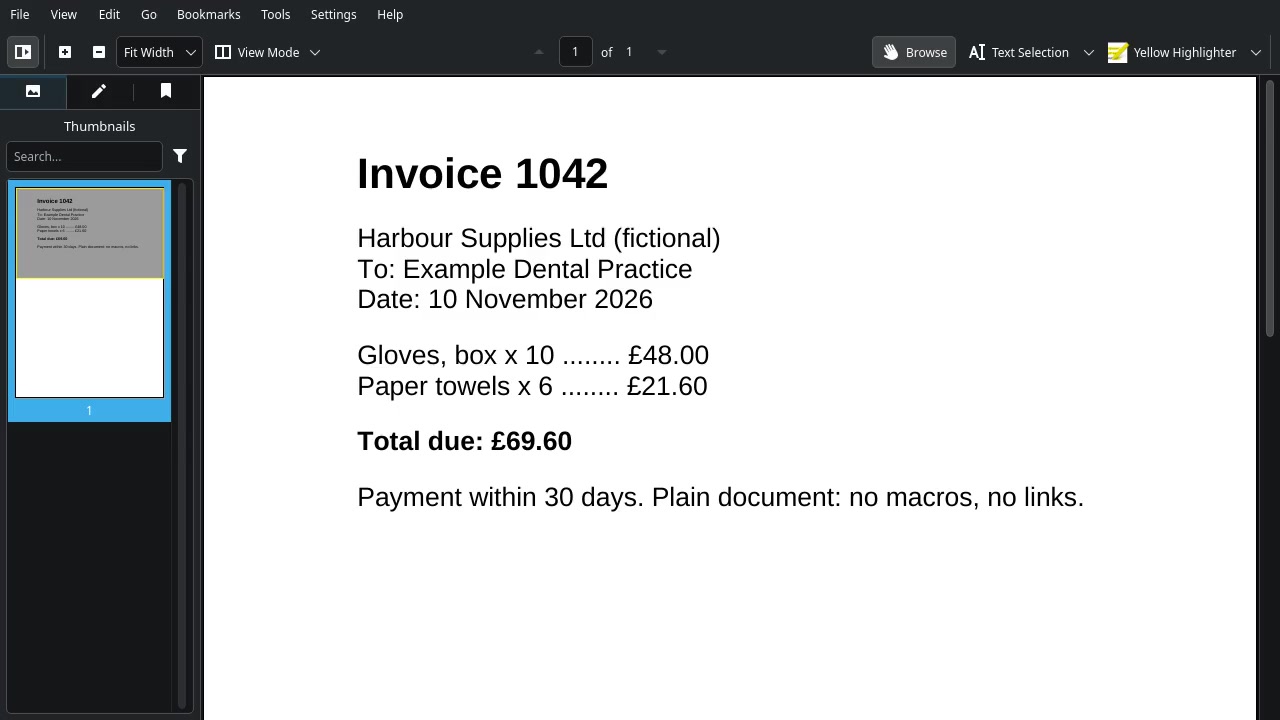
Malicious attachments
Explore what a suspicious document may trigger when opened.
See what you will learn →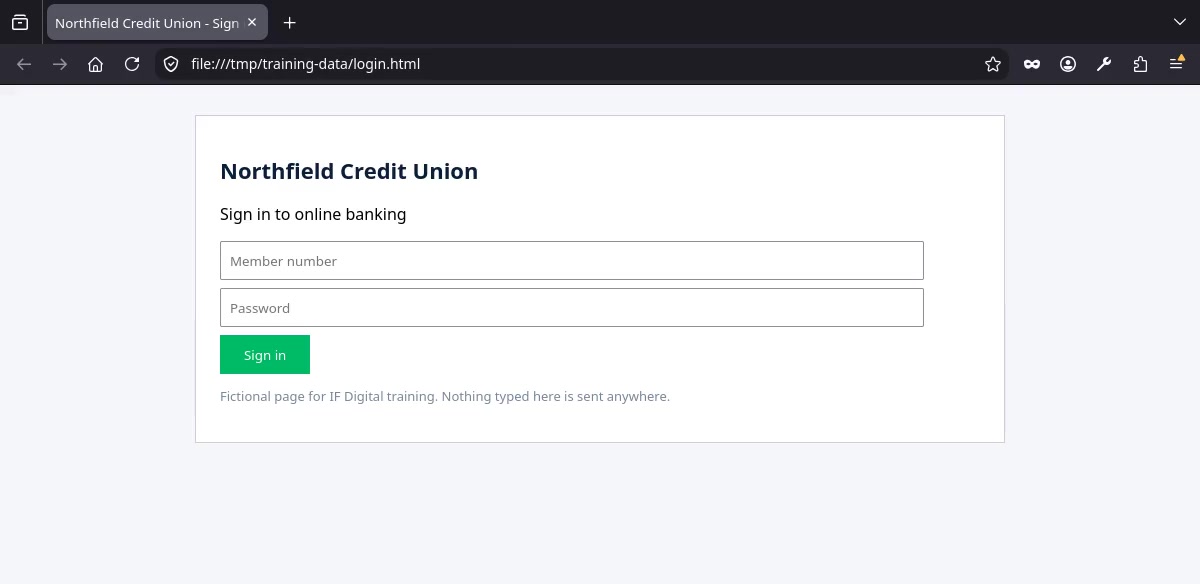
Fake login pages
Compare a genuine sign-in screen with a convincing imitation.
See what you will learn →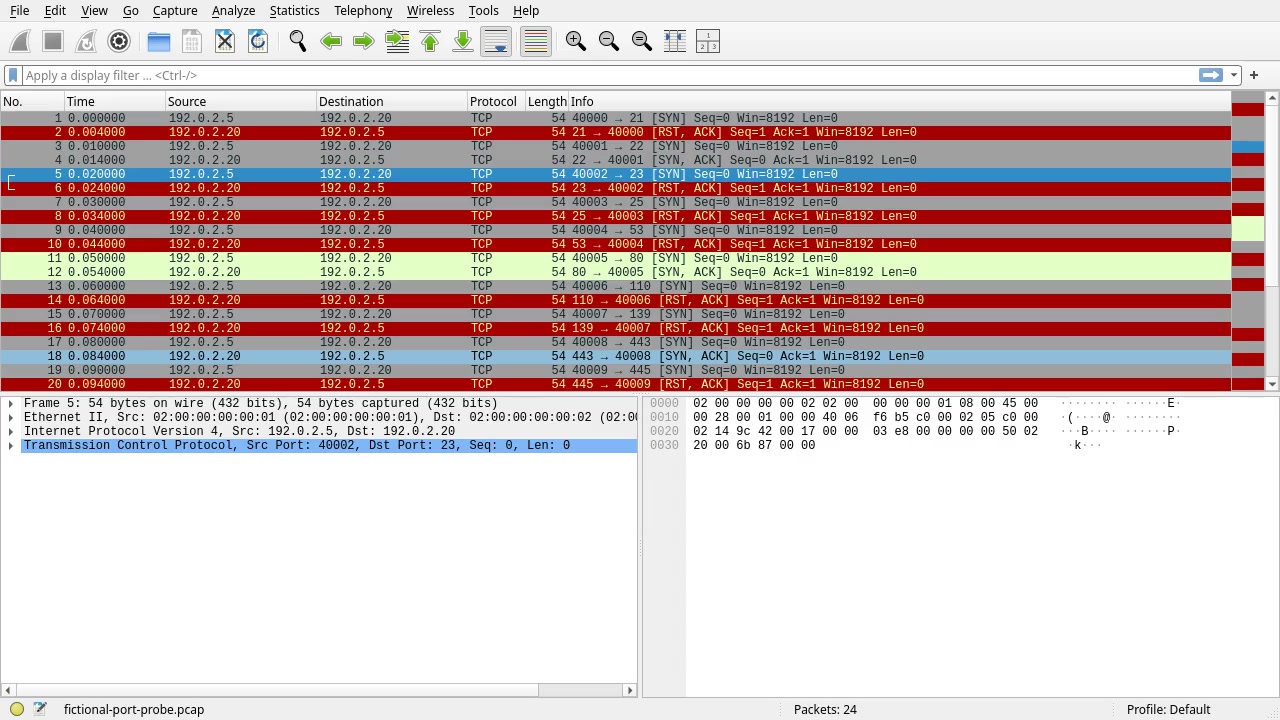
Network scanning
Watch how an unfamiliar network is mapped on a separate, isolated test network.
See what you will learn →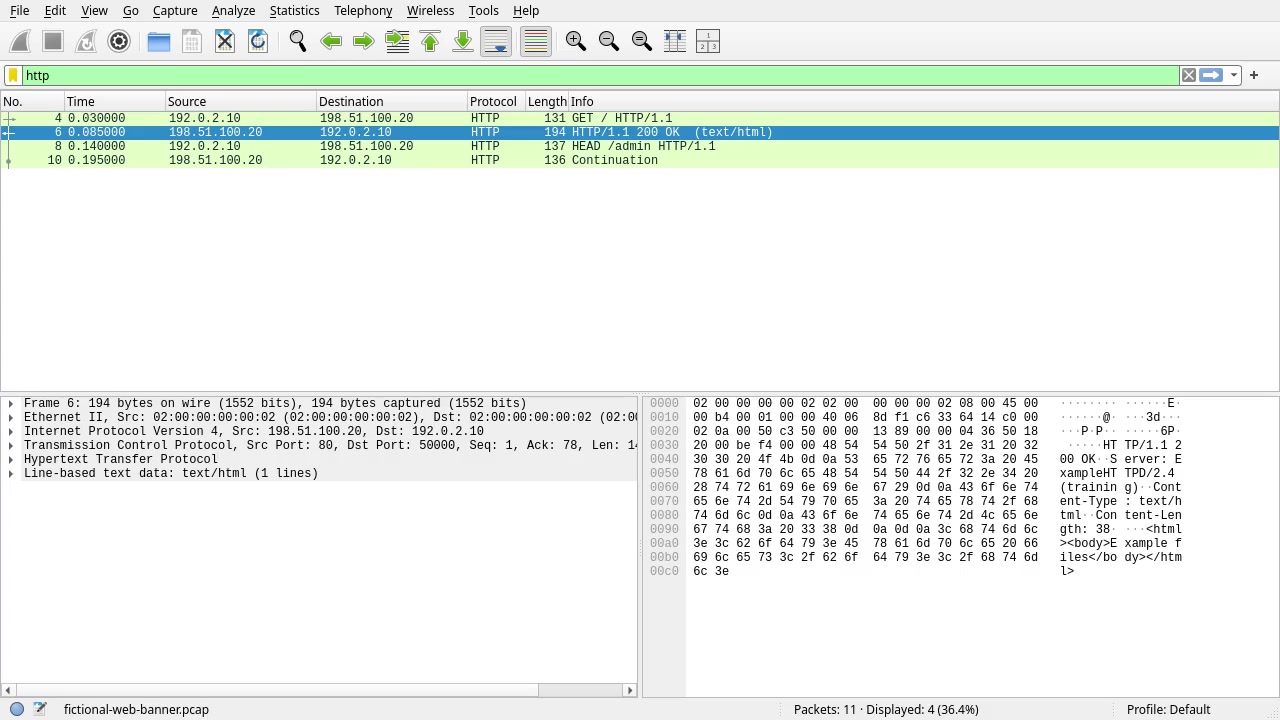
Service enumeration
See how service banners and responses reveal technical clues.
See what you will learn →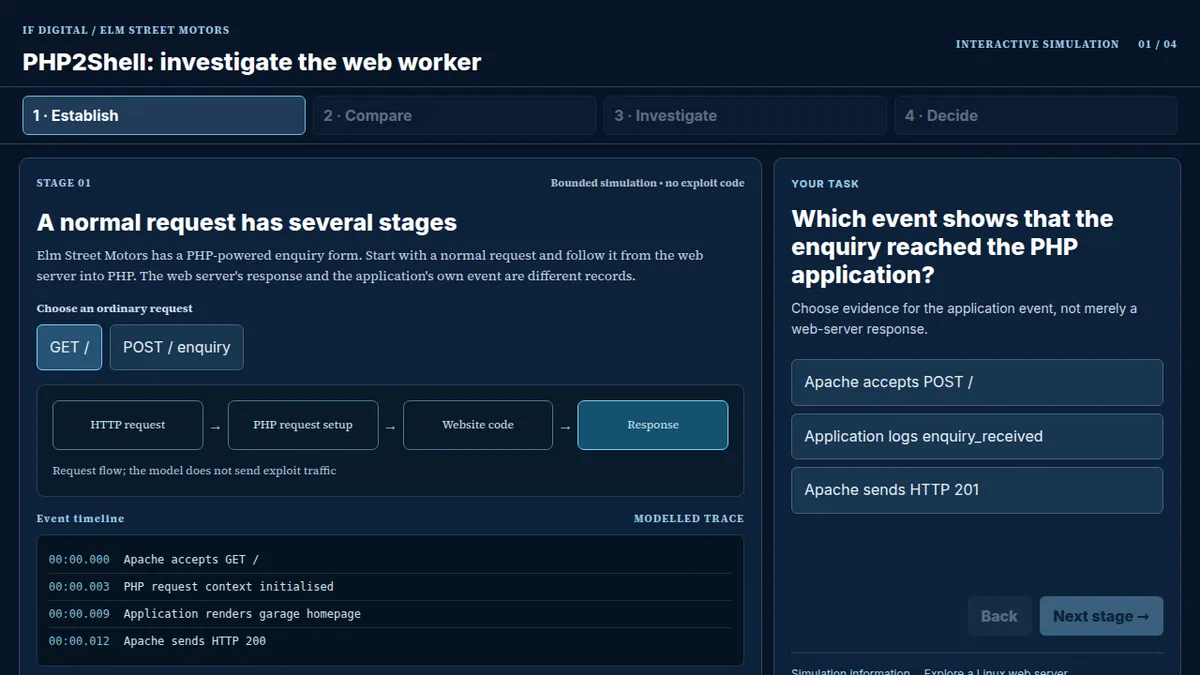
SQL injection
See how unsafe input can change a database query in a test application.
See what you will learn →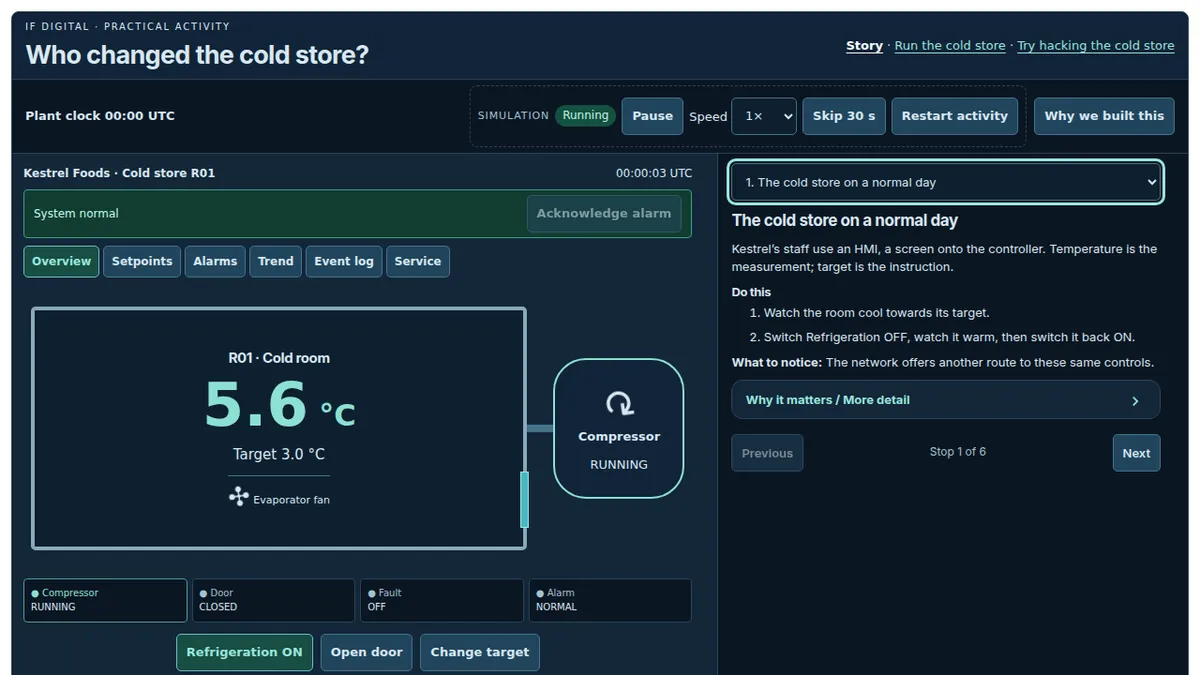
Remote access
See what a remote session looks like from both ends.
See what you will learn →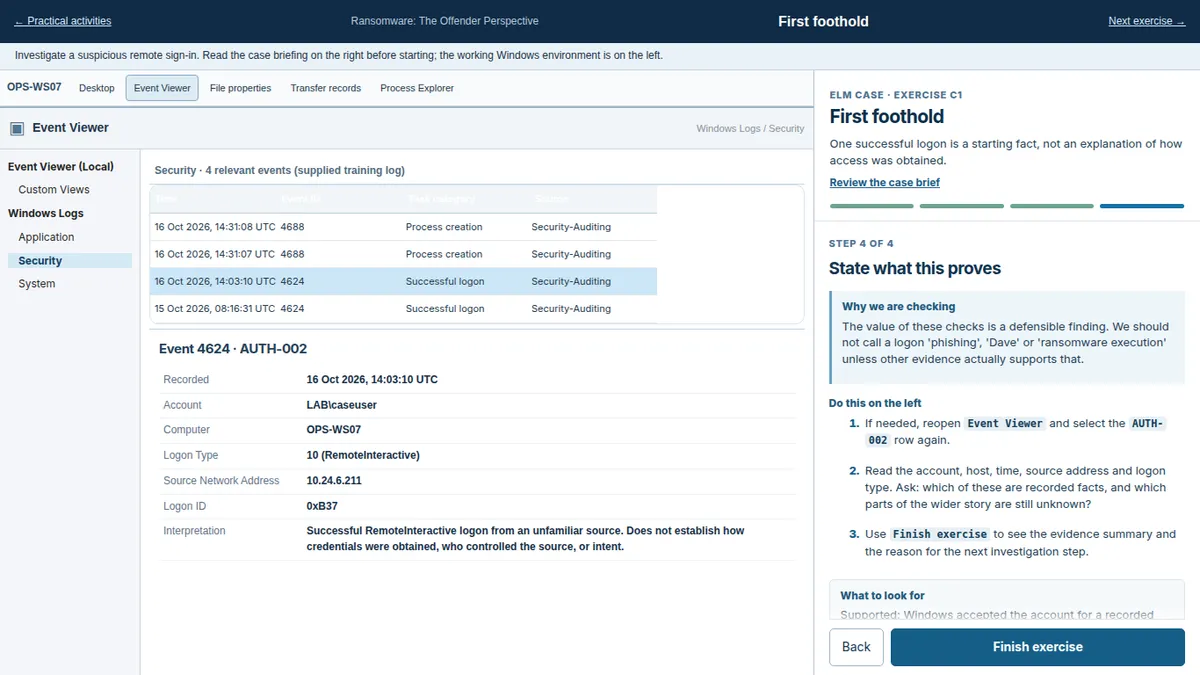
Privilege escalation
Understand what changes when a user gains elevated permissions.
See what you will learn →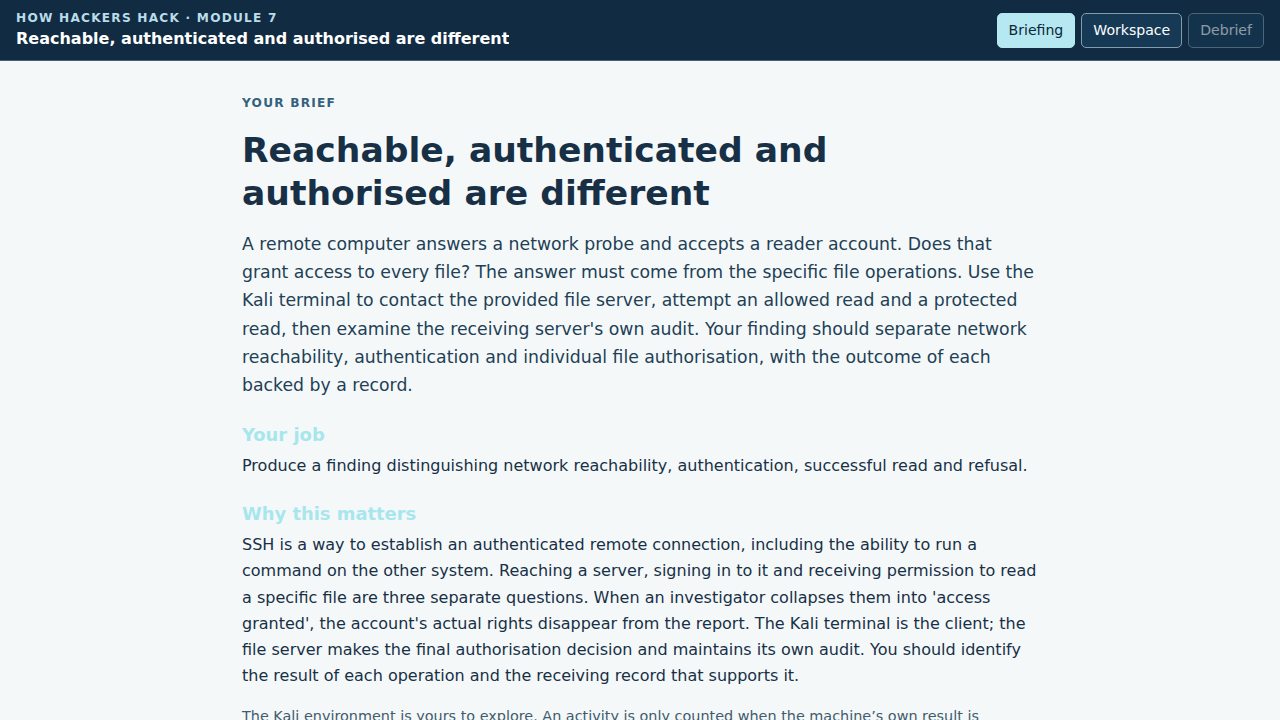
Lateral movement
Follow activity from one compromised machine to another.
See what you will learn →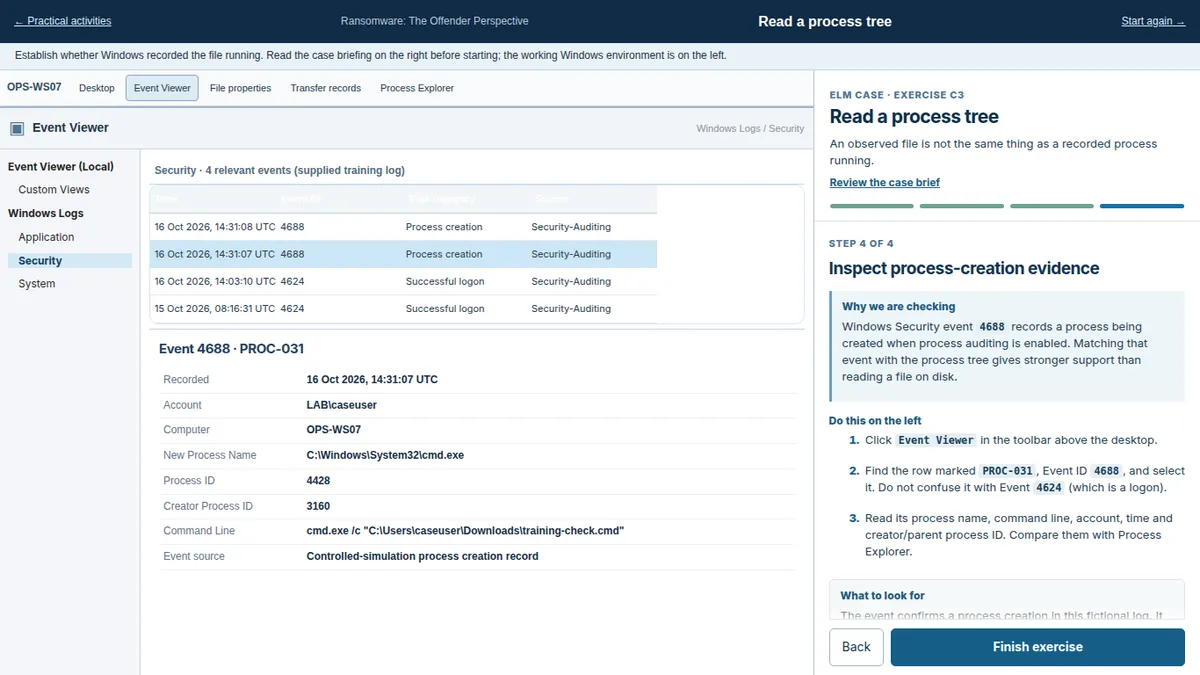
Persistence
See how unauthorised access can survive a restart.
See what you will learn →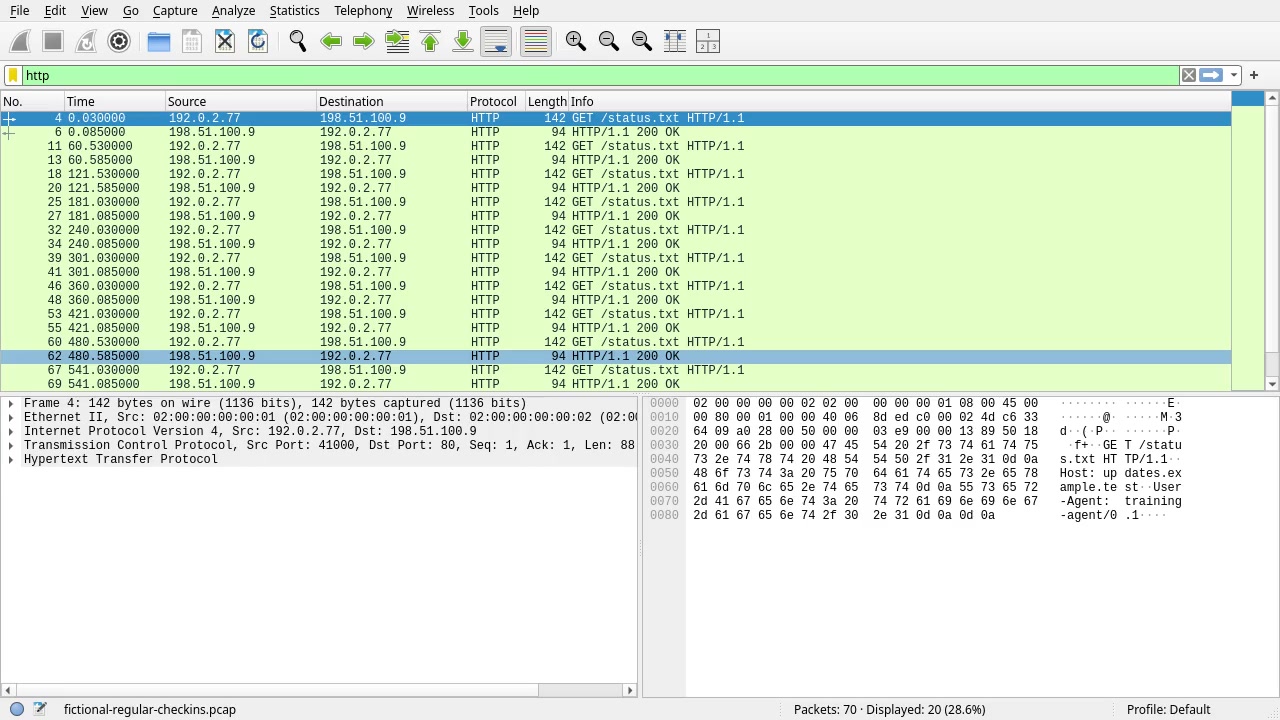
Command and control
Understand the network traffic used to control a compromised host.
See what you will learn →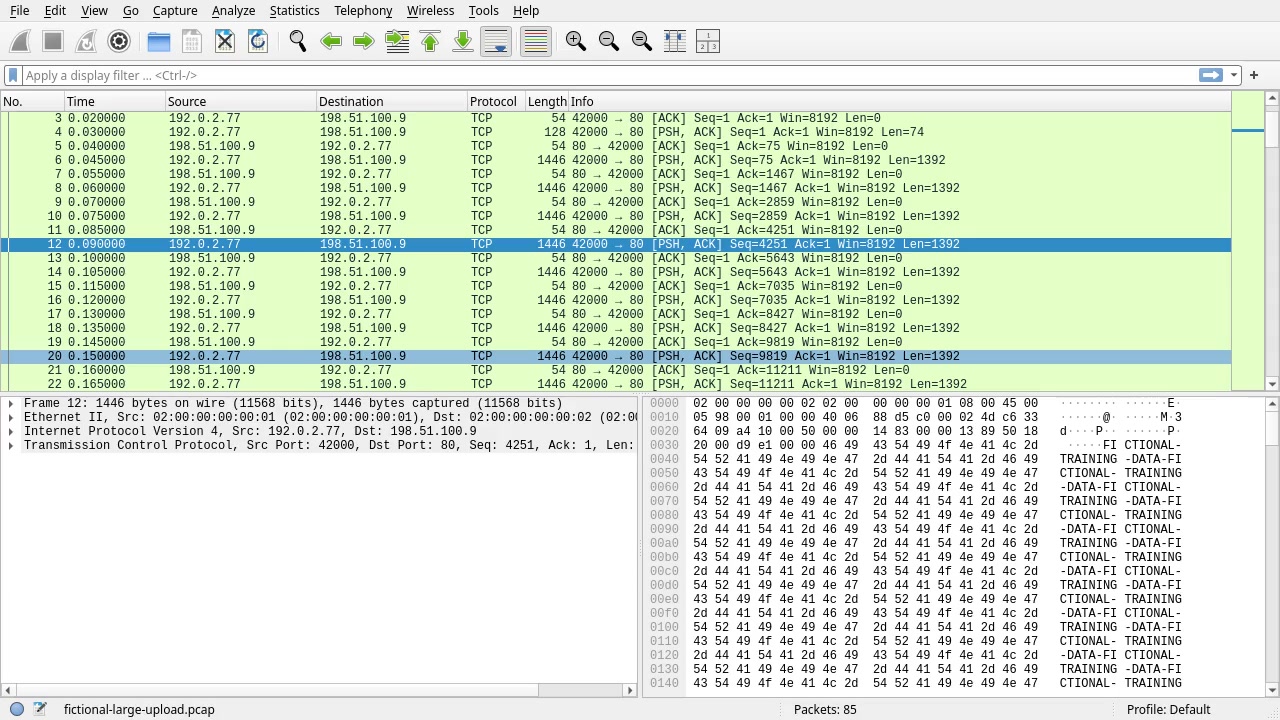
Data exfiltration
Explore how unusual outbound transfers appear in records.
See what you will learn →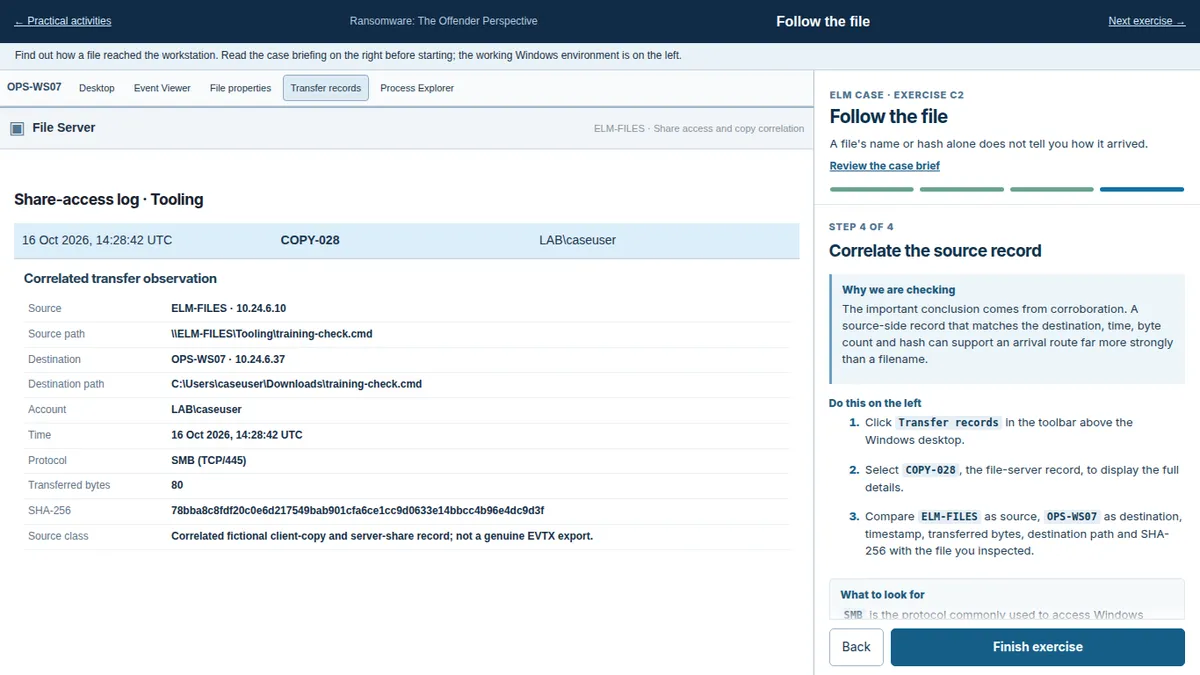
Ransomware encryption
Watch the visible impact of file encryption in an isolated example.
See what you will learn →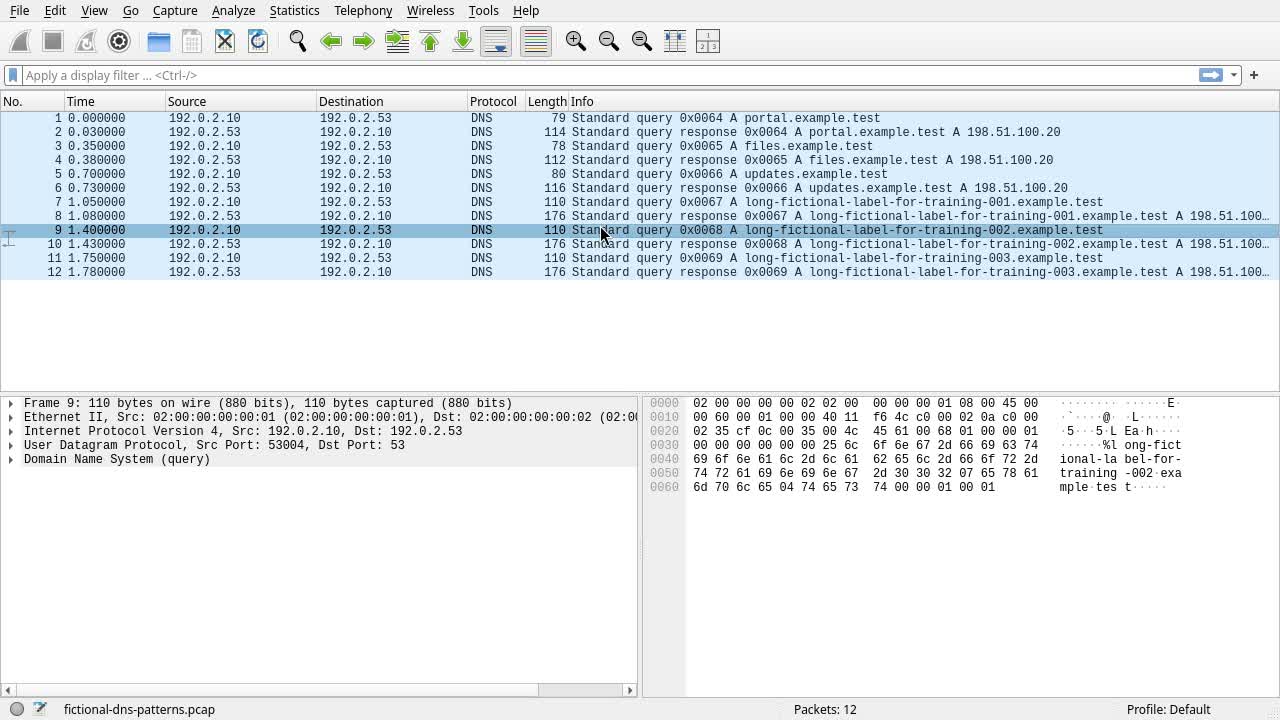
DNS tunnelling
See how DNS requests can carry unexpected information.
See what you will learn →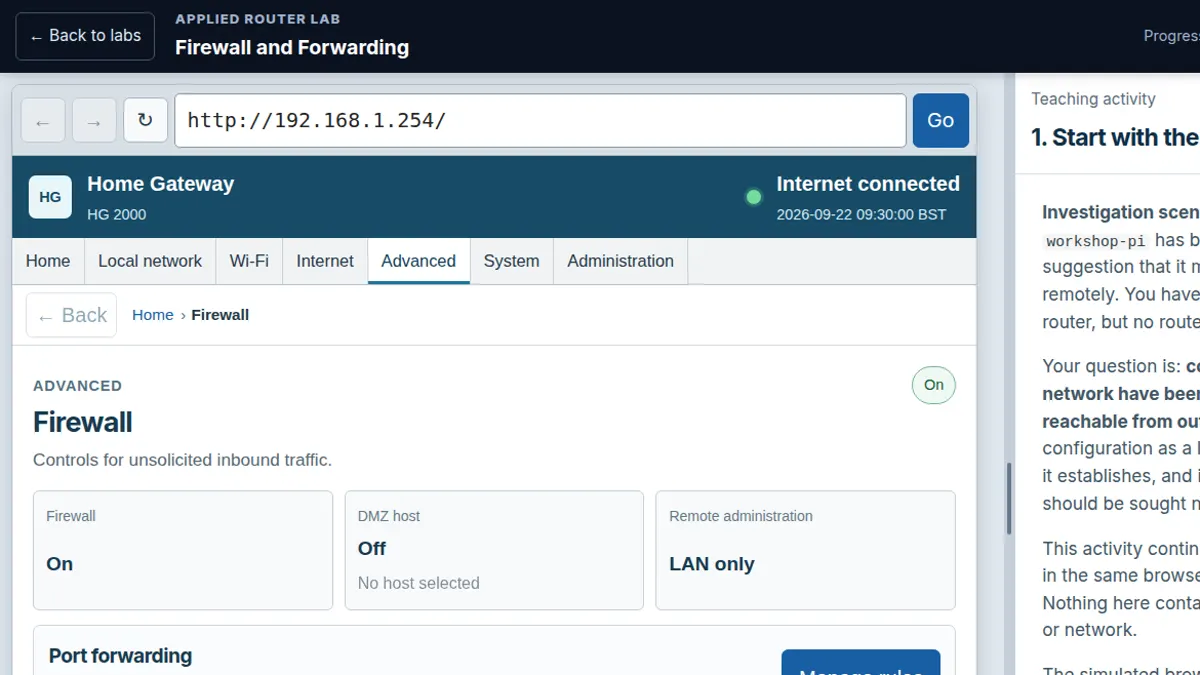
Finding exposed devices
See how internet-facing services appear in a search index.
See what you will learn →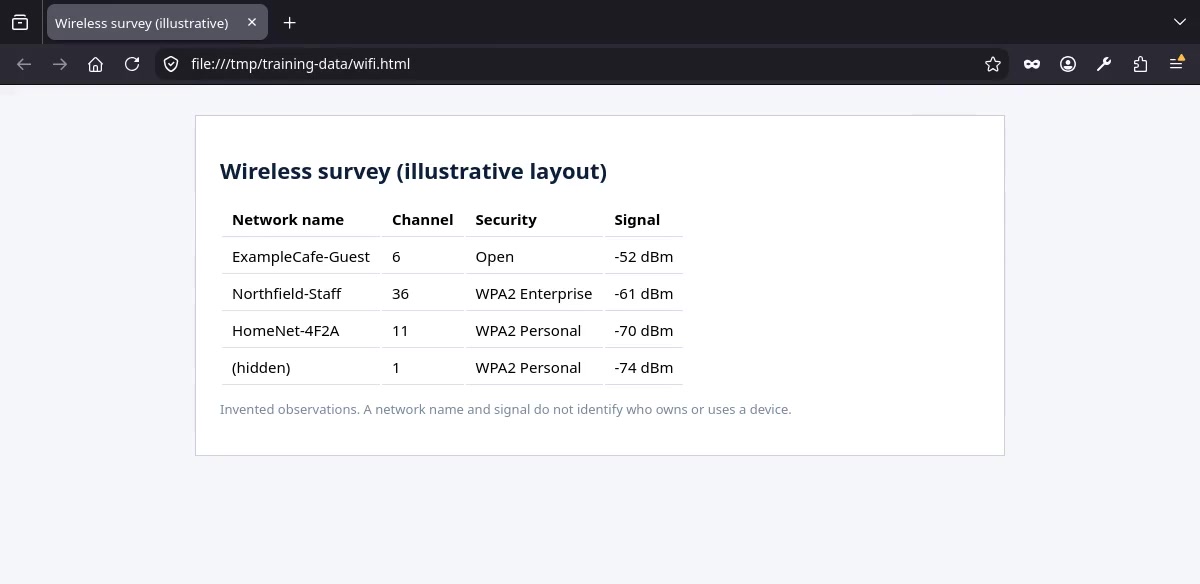
Wi-Fi reconnaissance
Explore what wireless discovery reveals without joining a network.
See what you will learn →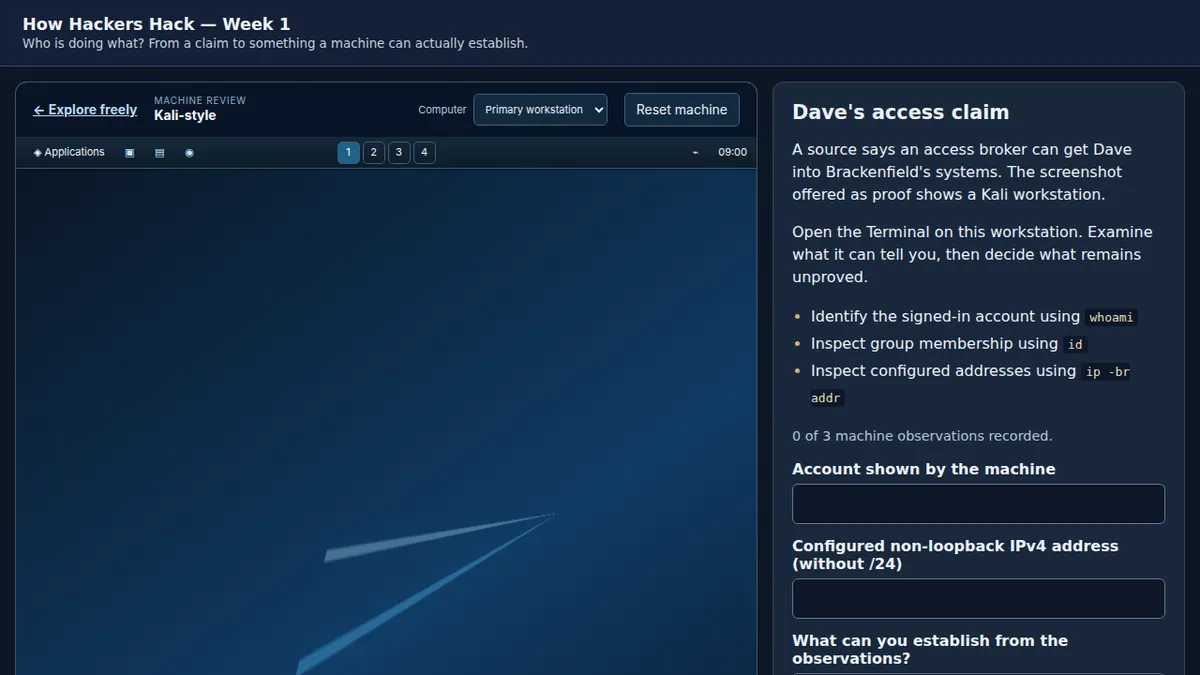
Inside Kali Linux
Take a first look at the tools and workspace used in security demonstrations.
See what you will learn →
Inside Parrot OS
Explore Parrot’s Linux desktop, security tools and the workspace used for digital investigations.
See what you will learn →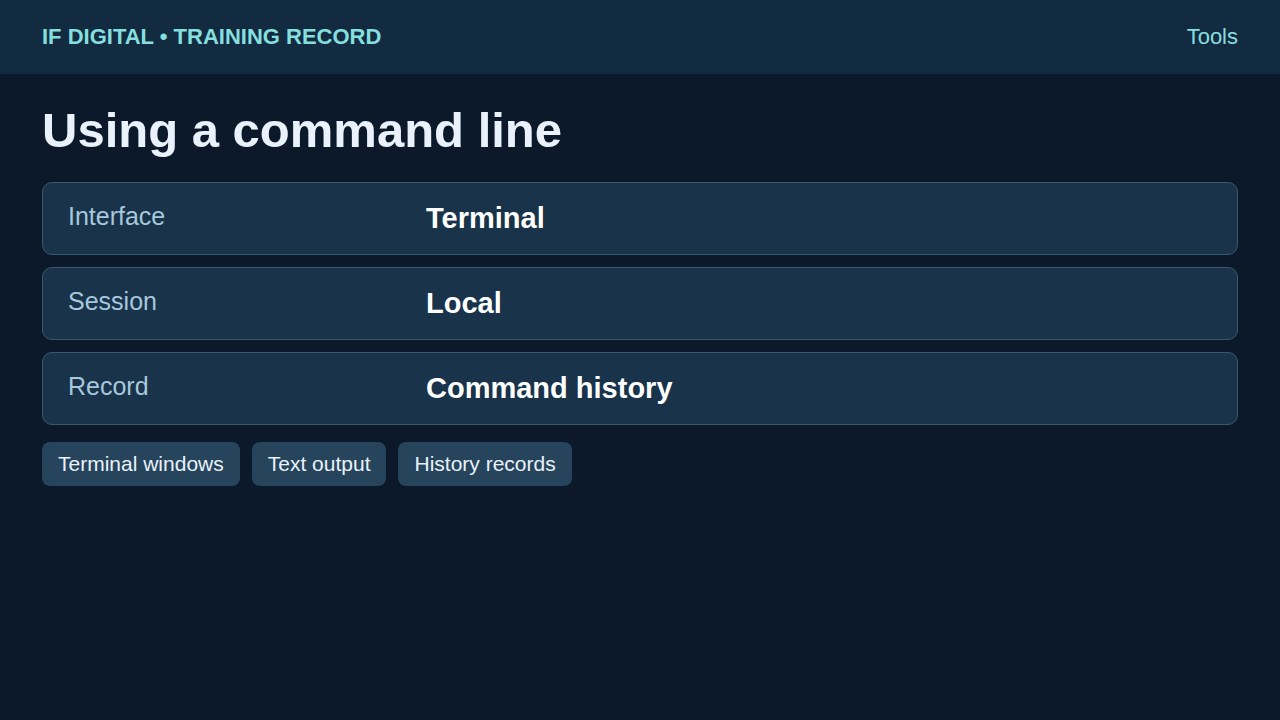
Using a command line
Recognise a text-based interface and distinguish it from a graphical desktop.
See what you will learn →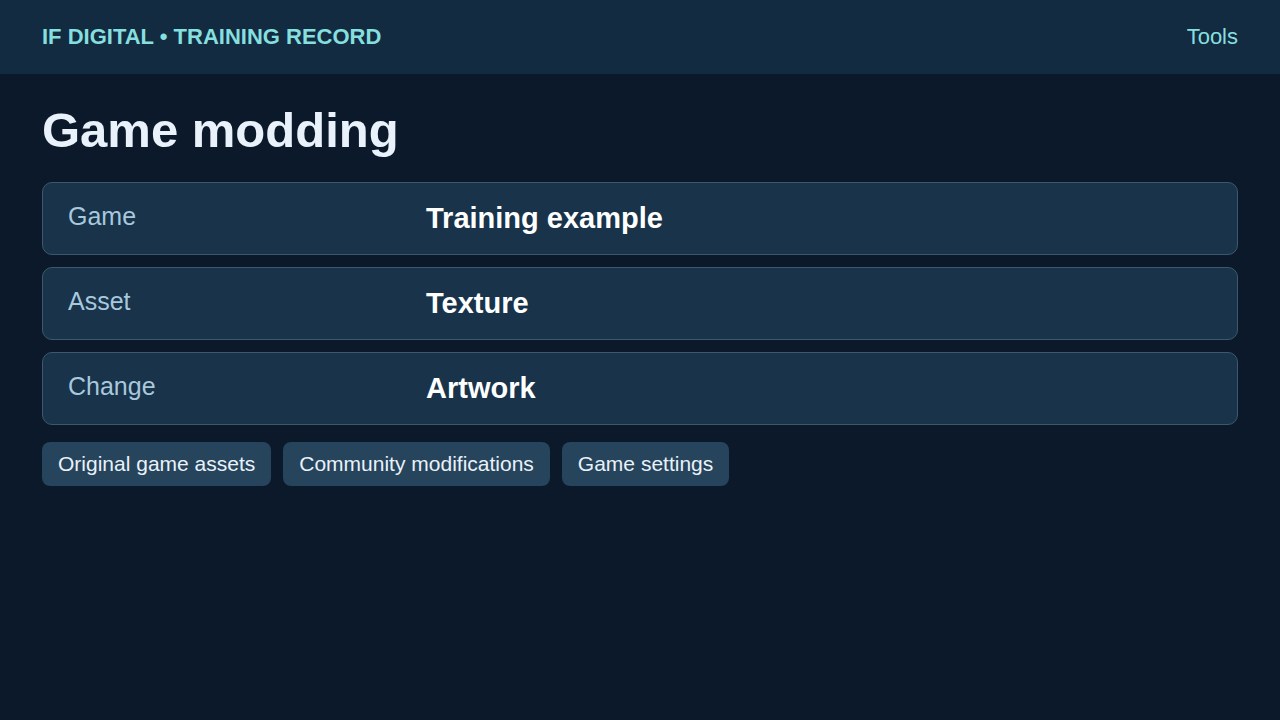
Game modding
Understand the difference between modifying a game and cheating or interfering with other players.
See what you will learn →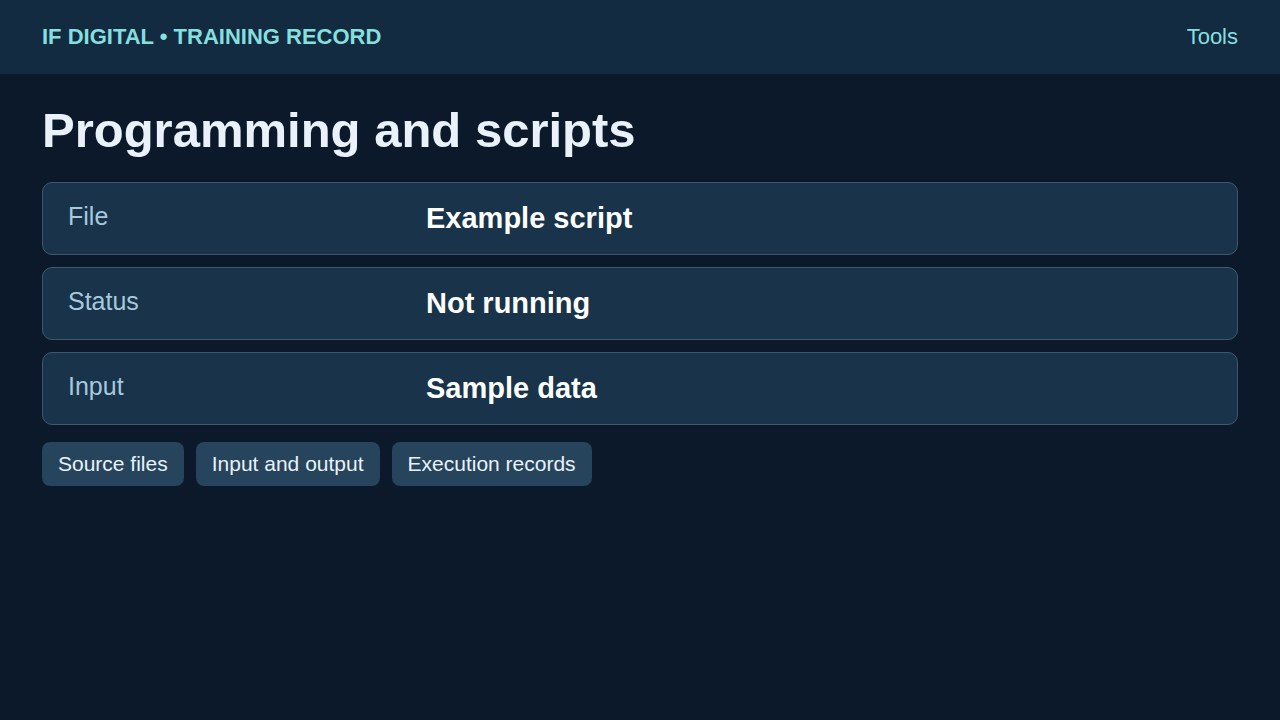
Programming and scripts
Recognise source code, program output and the difference between a file and a running program.
See what you will learn →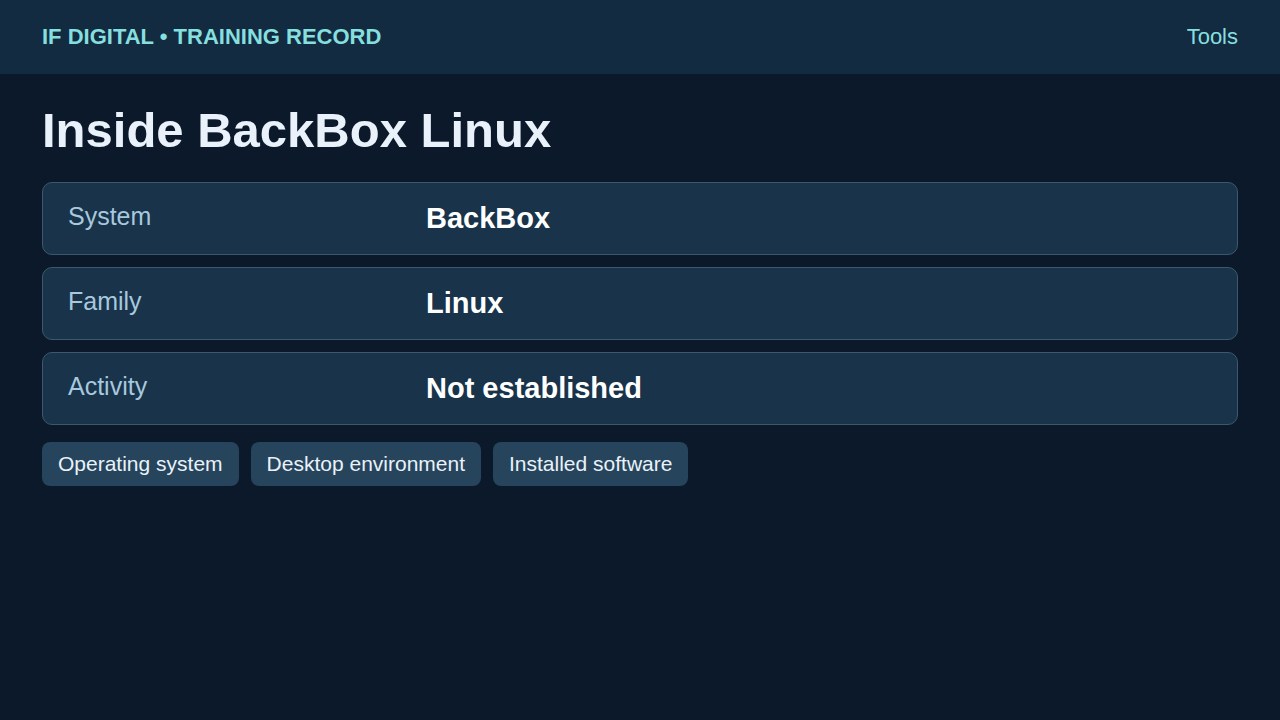
Inside BackBox Linux
Recognise another Linux security distribution and the difference between software ownership and use.
See what you will learn →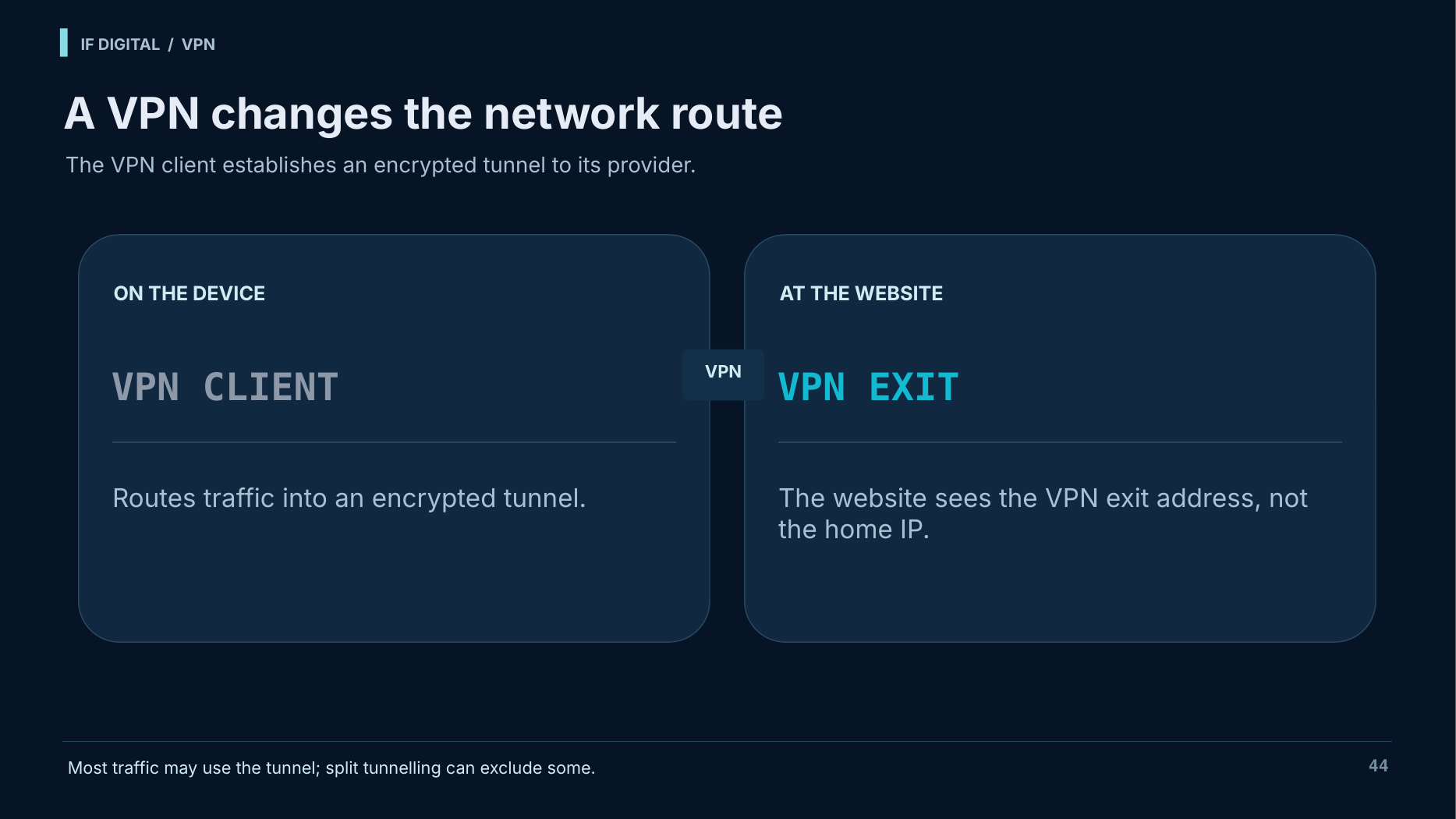
VPN connections
Understand why a recorded internet address may belong to an intermediary rather than the original device.
See what you will learn →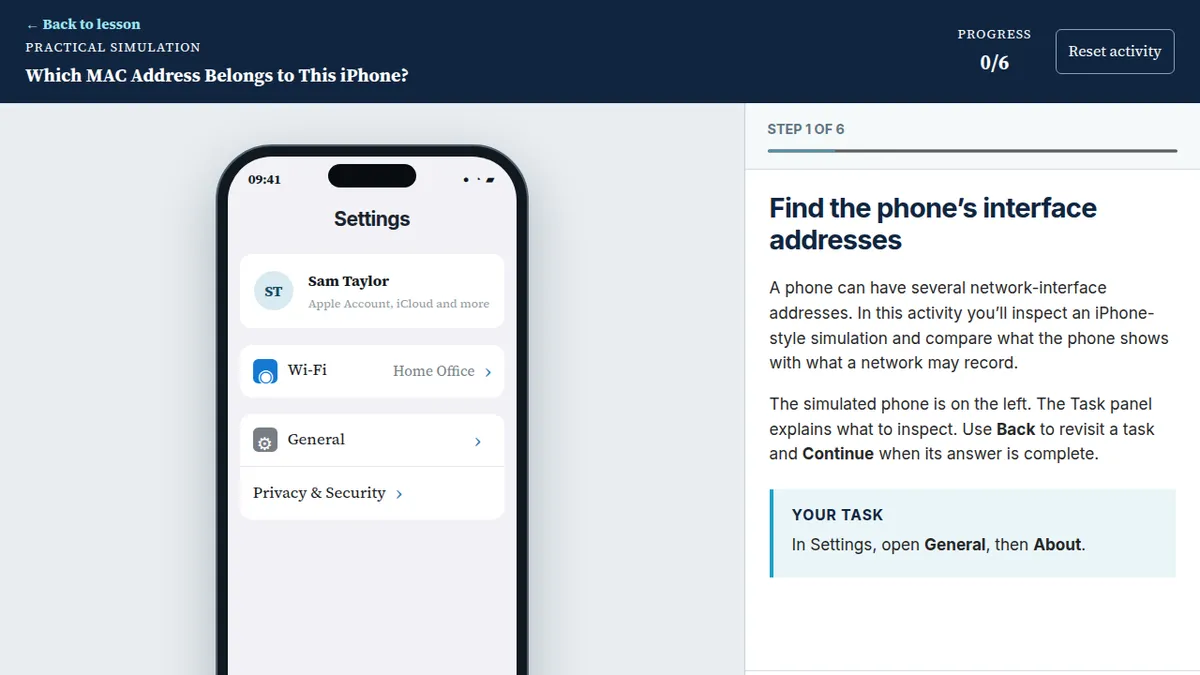
MAC addresses
Understand what a local network interface identifier can and cannot establish.
See what you will learn →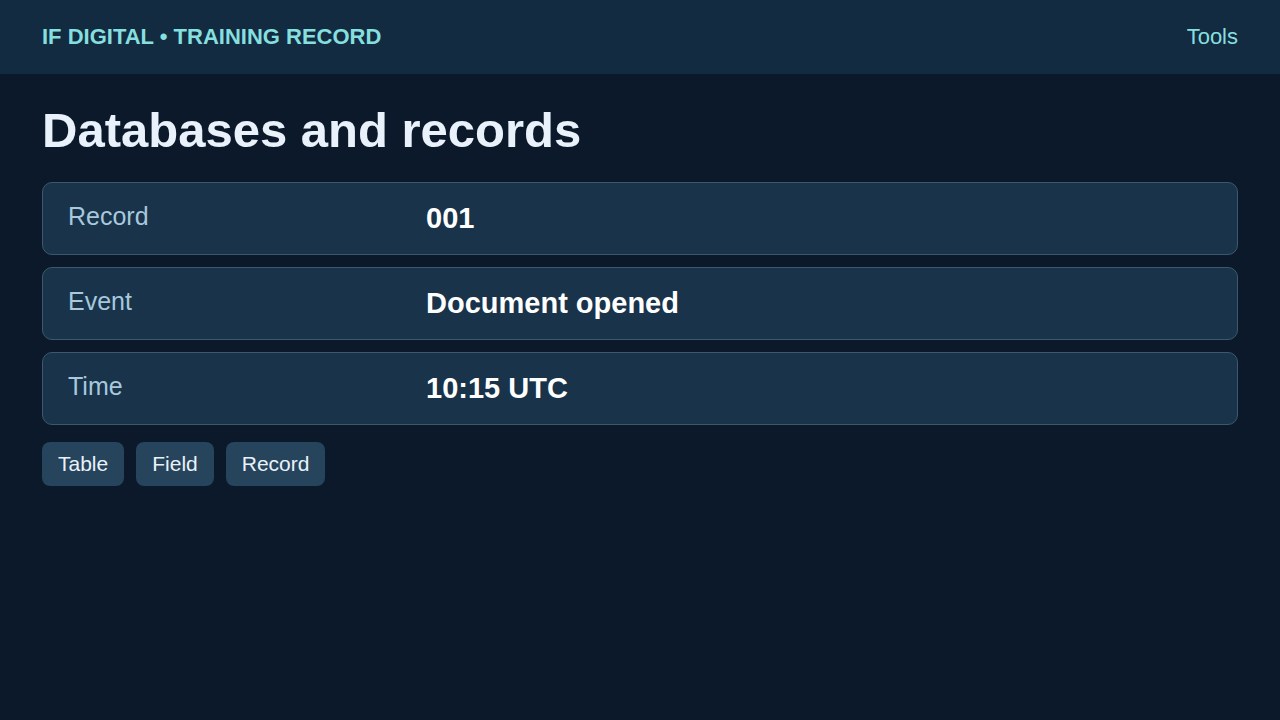
Databases and records
Recognise tables, fields and records as a source of digital evidence.
See what you will learn →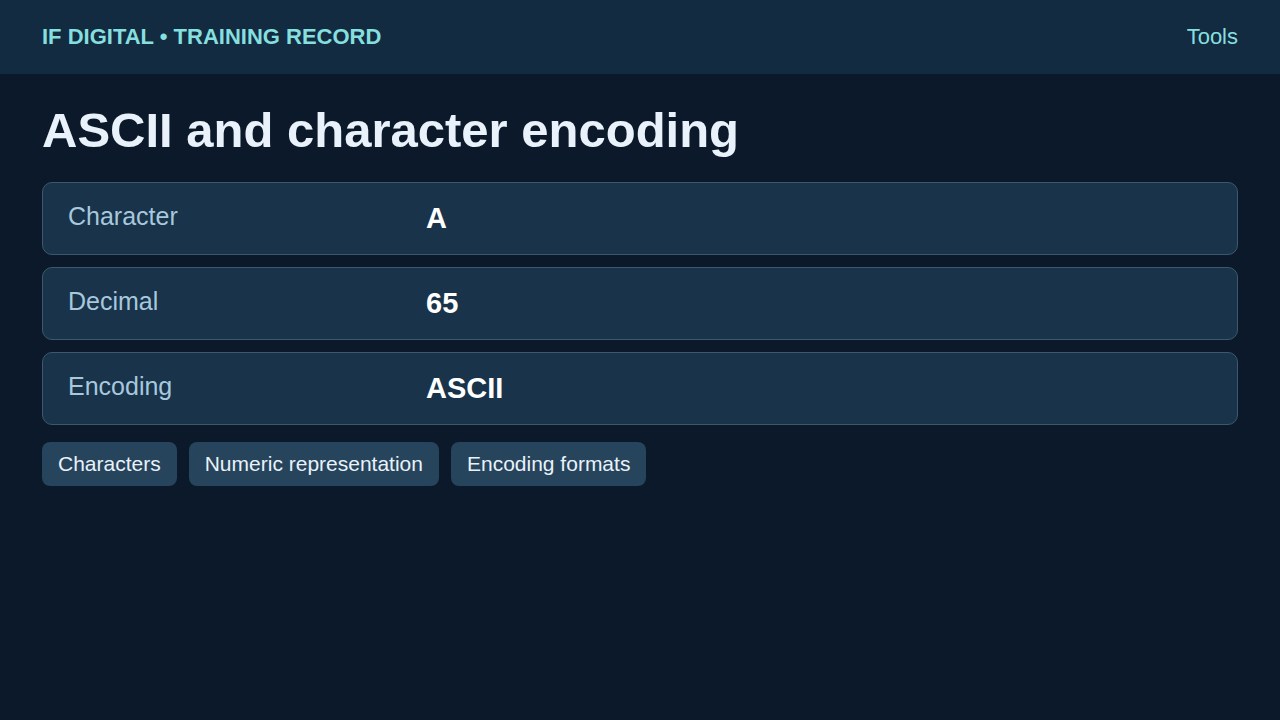
ASCII and character encoding
Understand how text is represented numerically and why encoding is not encryption.
See what you will learn →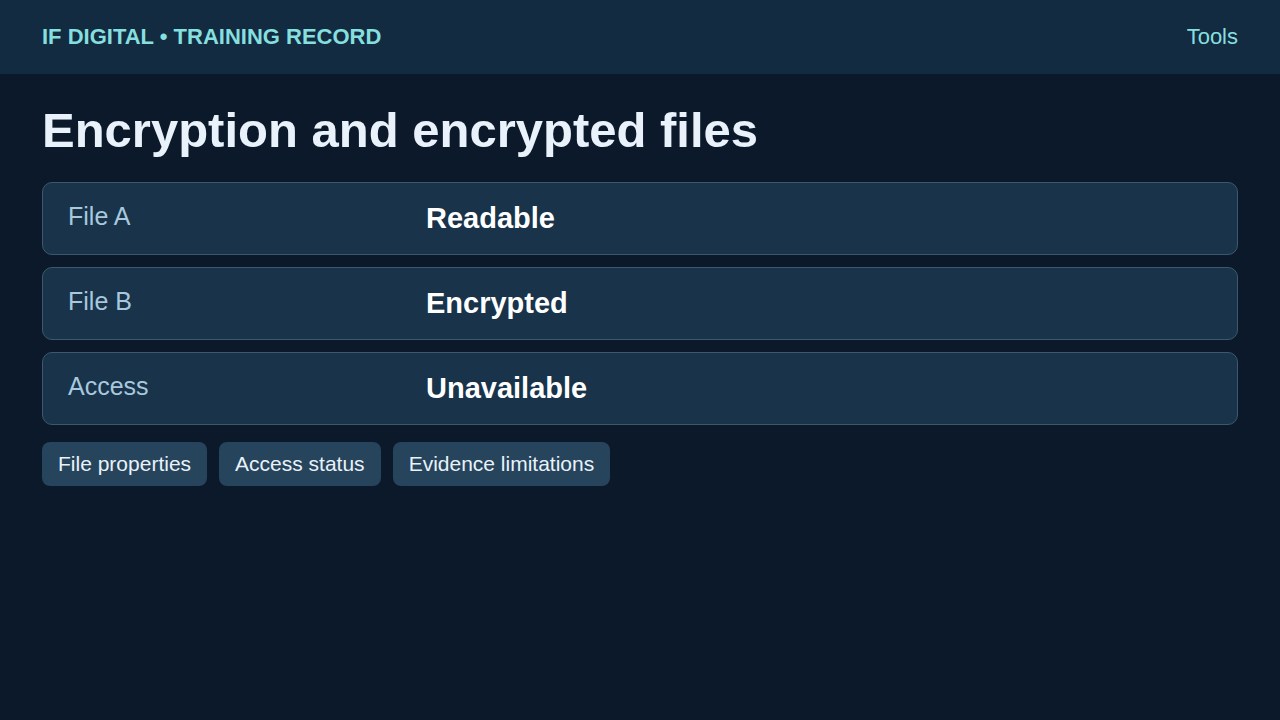
Encryption and encrypted files
Recognise encrypted data and distinguish it from ordinary encoding and hashing.
See what you will learn →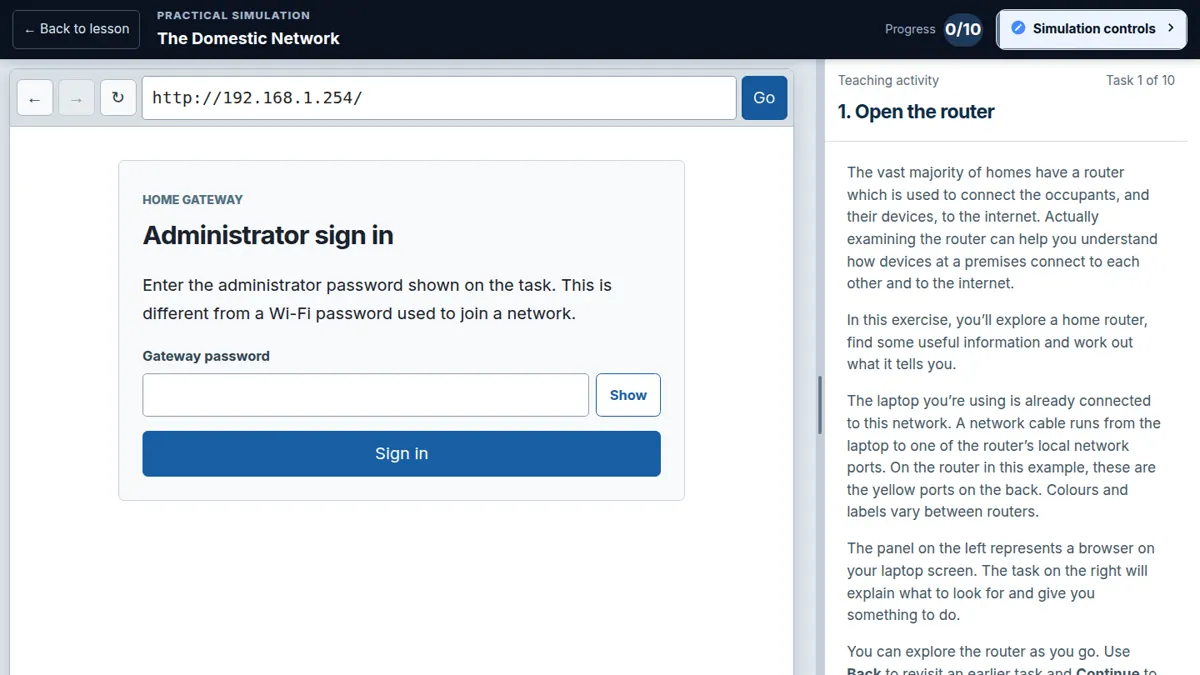
Wi-Fi security standards
Recognise WEP, WPA and WPA2 in network configuration records.
See what you will learn →DHCP, NAT and subnets
Understand local addressing and why several devices can share a public internet address.
See what you will learn →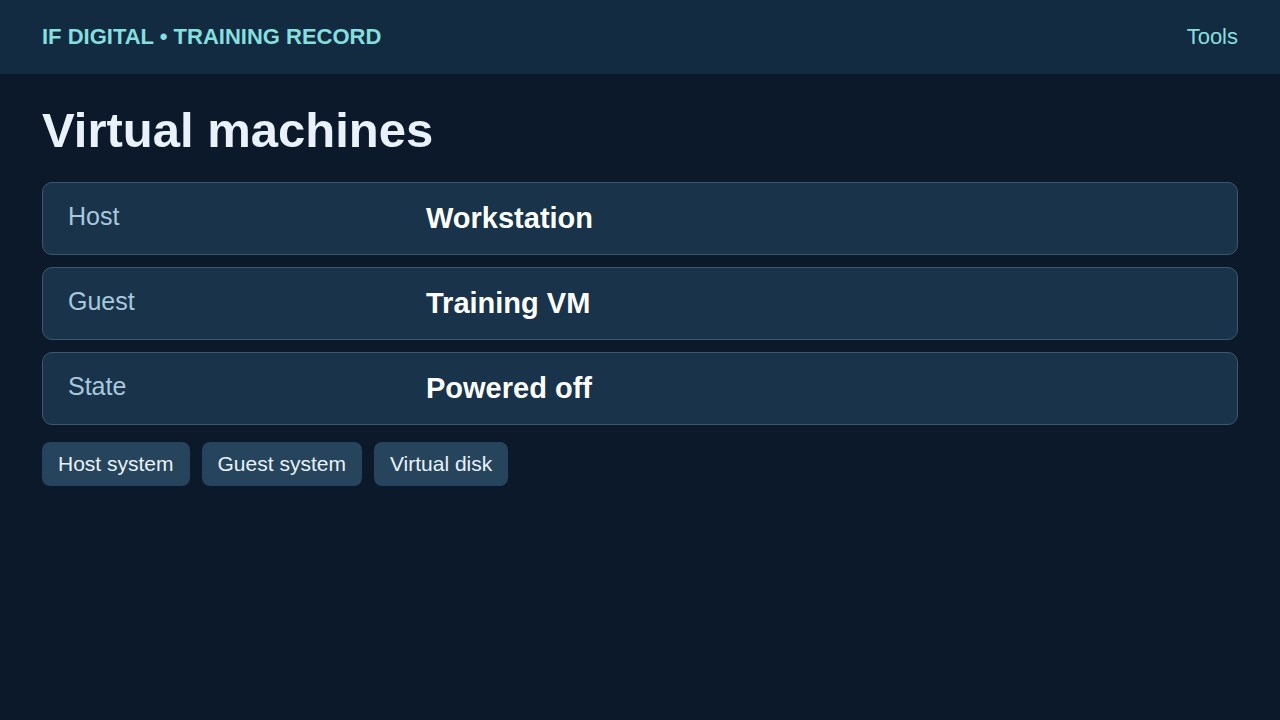
Virtual machines
Recognise a guest computer and distinguish its records from those of the host.
See what you will learn →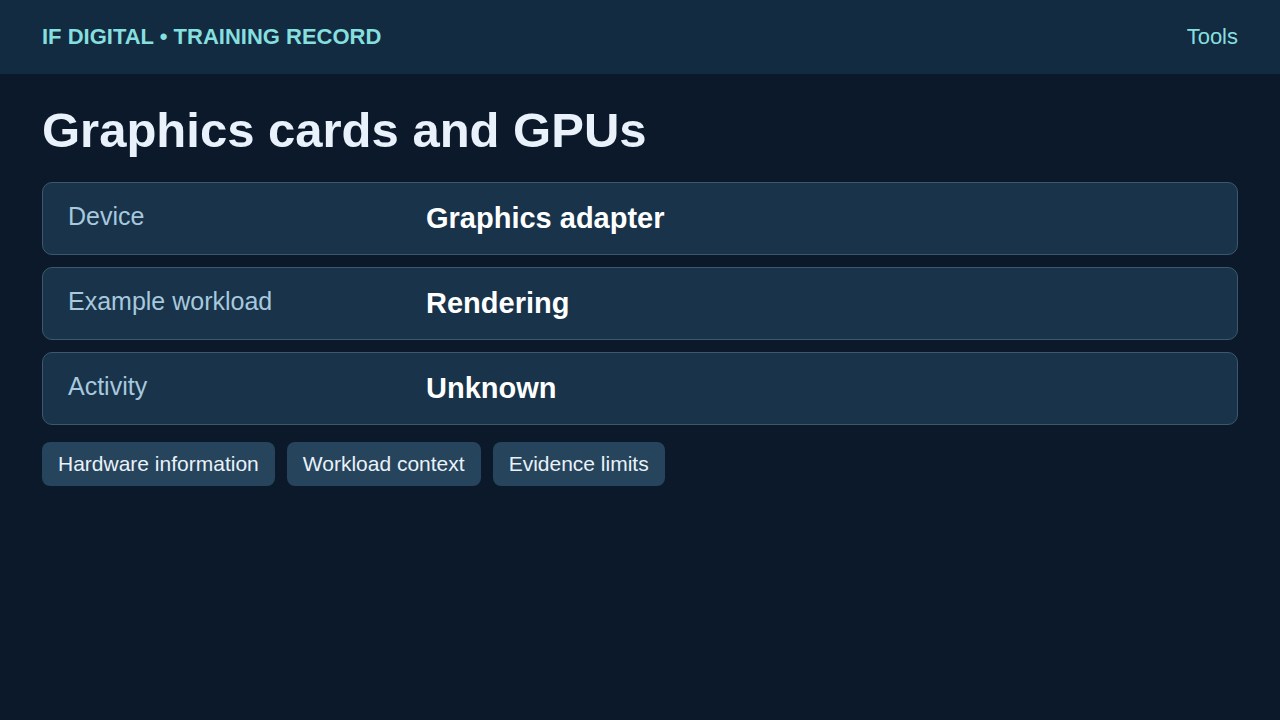
Graphics cards and GPUs
Recognise a graphics processor and understand why capability alone does not establish its use.
See what you will learn →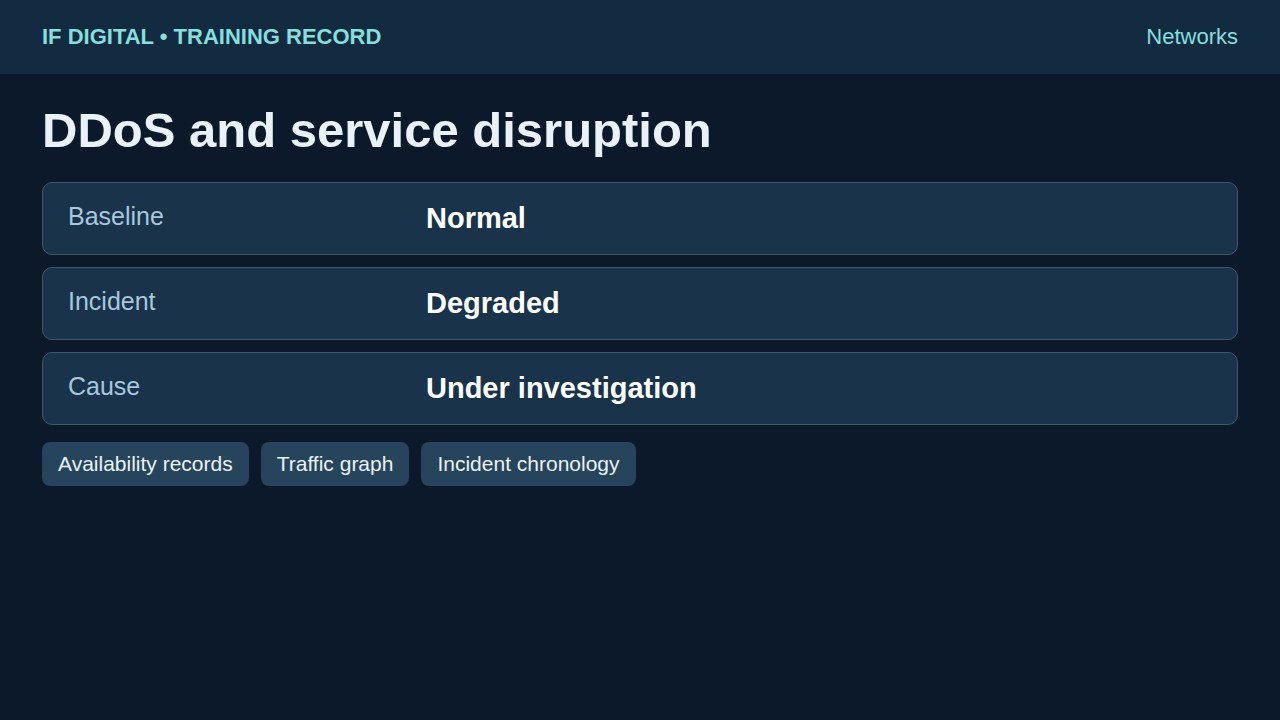
DDoS and service disruption
Recognise service availability incidents and distinguish disruption from confirmed malicious activity.
See what you will learn →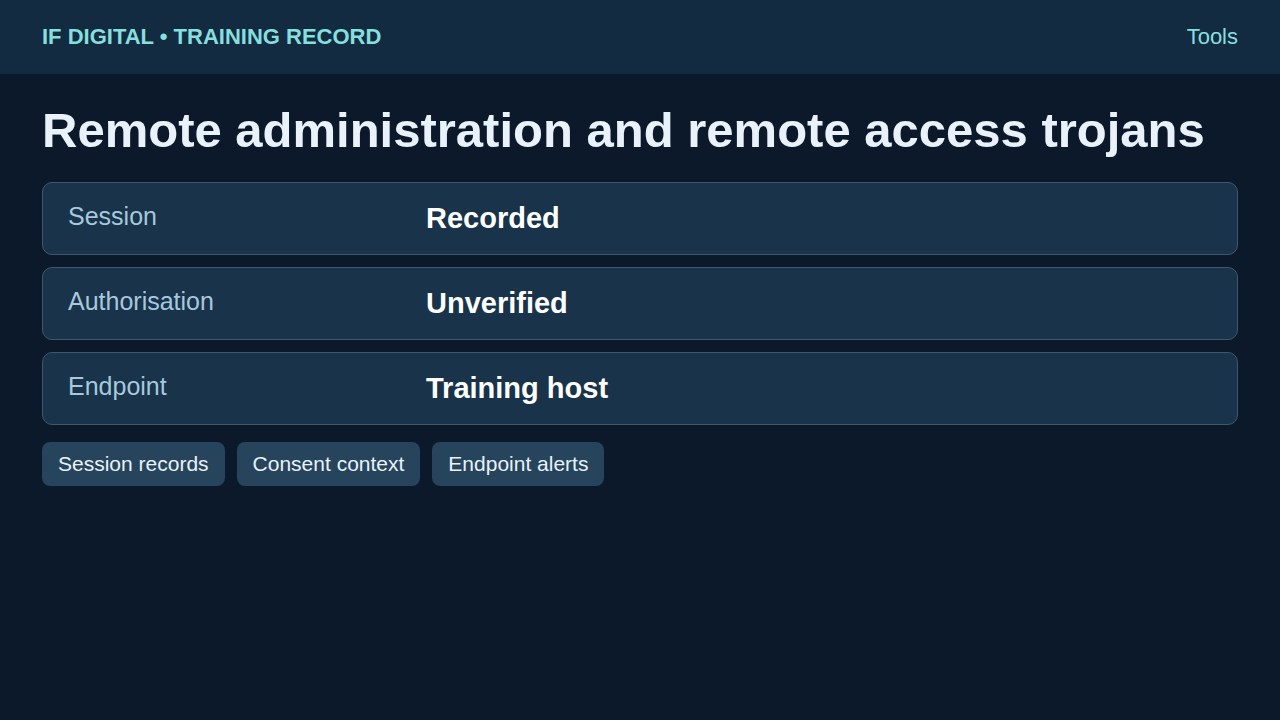
Remote administration and remote access trojans
Distinguish legitimate remote support from allegations of unauthorised remote control.
See what you will learn →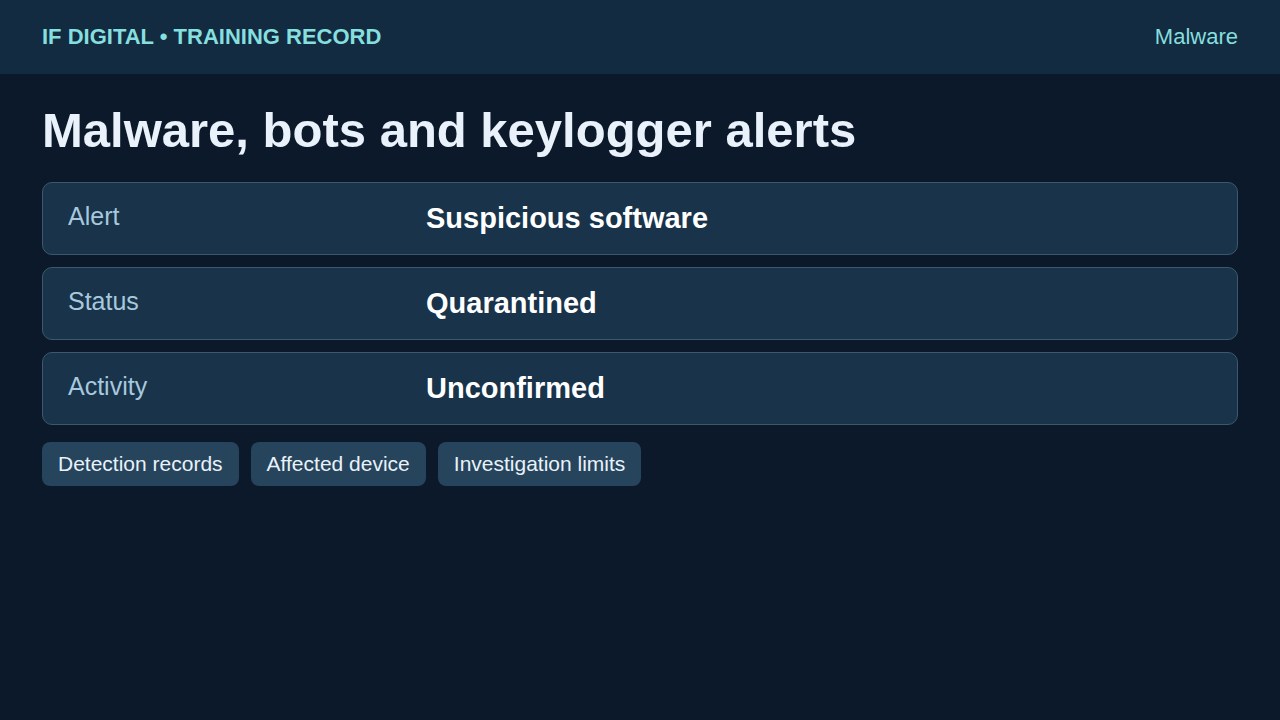
Malware, bots and keylogger alerts
Recognise common terms in security alerts and distinguish detections from confirmed activity.
See what you will learn →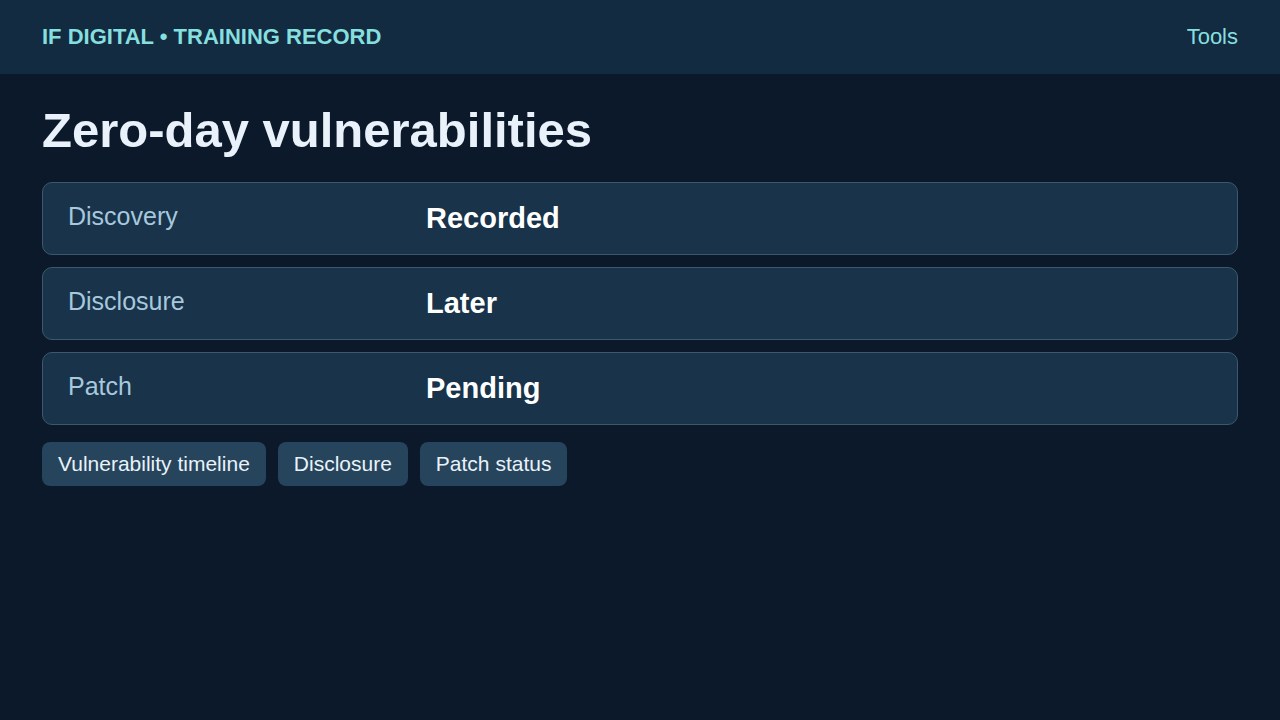
Zero-day vulnerabilities
Understand the difference between a vulnerability, its disclosure and evidence of exploitation.
See what you will learn →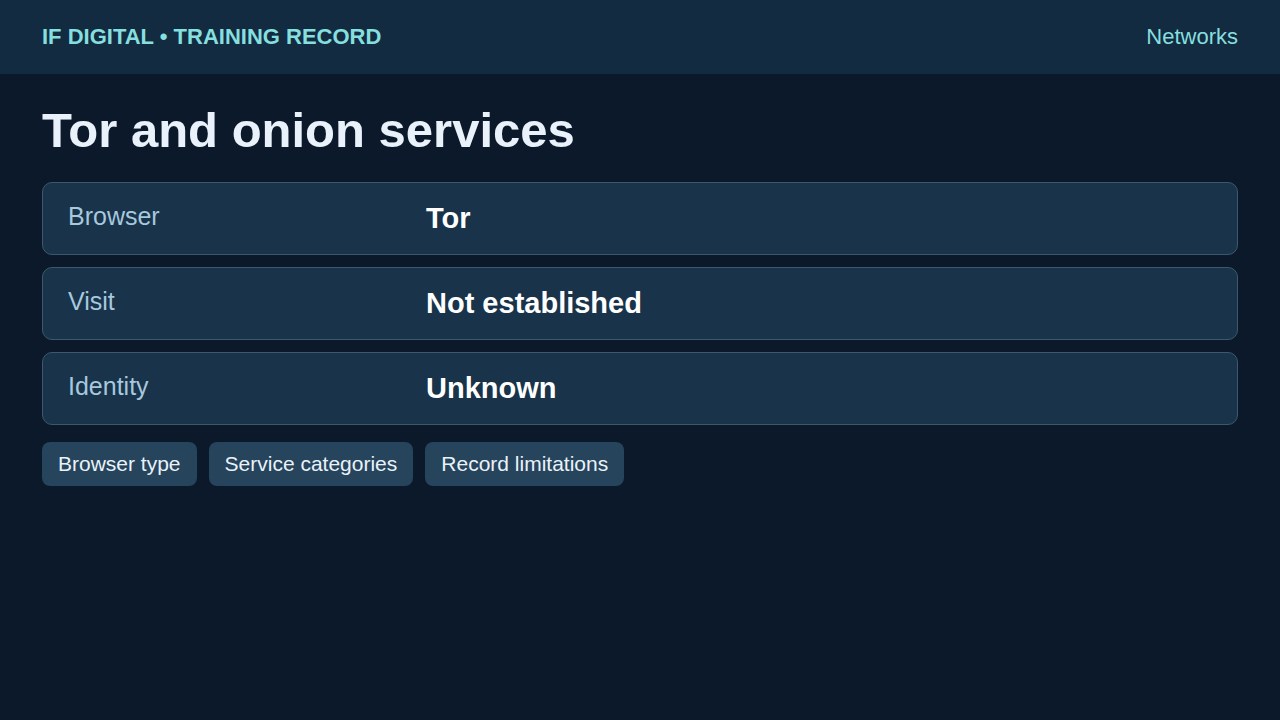
Tor and onion services
Understand the terminology around privacy browsers and distinguish installation from a recorded visit.
See what you will learn →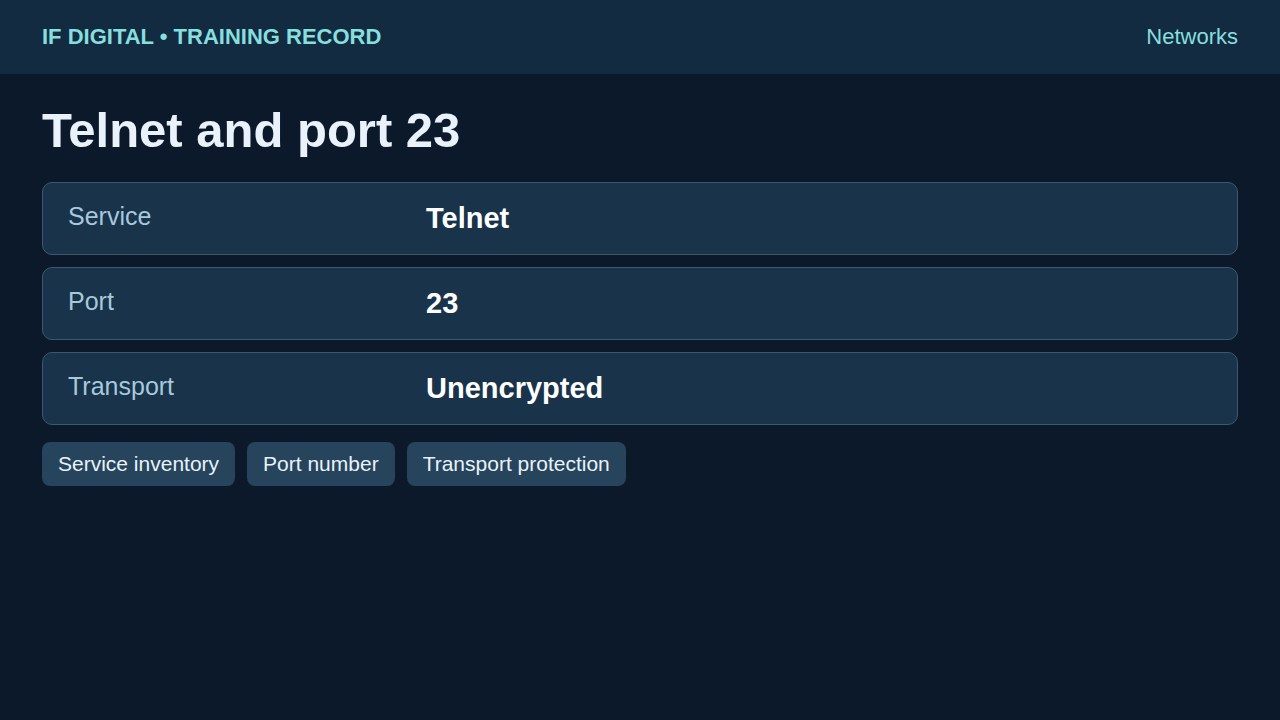
Telnet and port 23
Recognise a legacy remote terminal service in an inventory and understand its security context.
See what you will learn →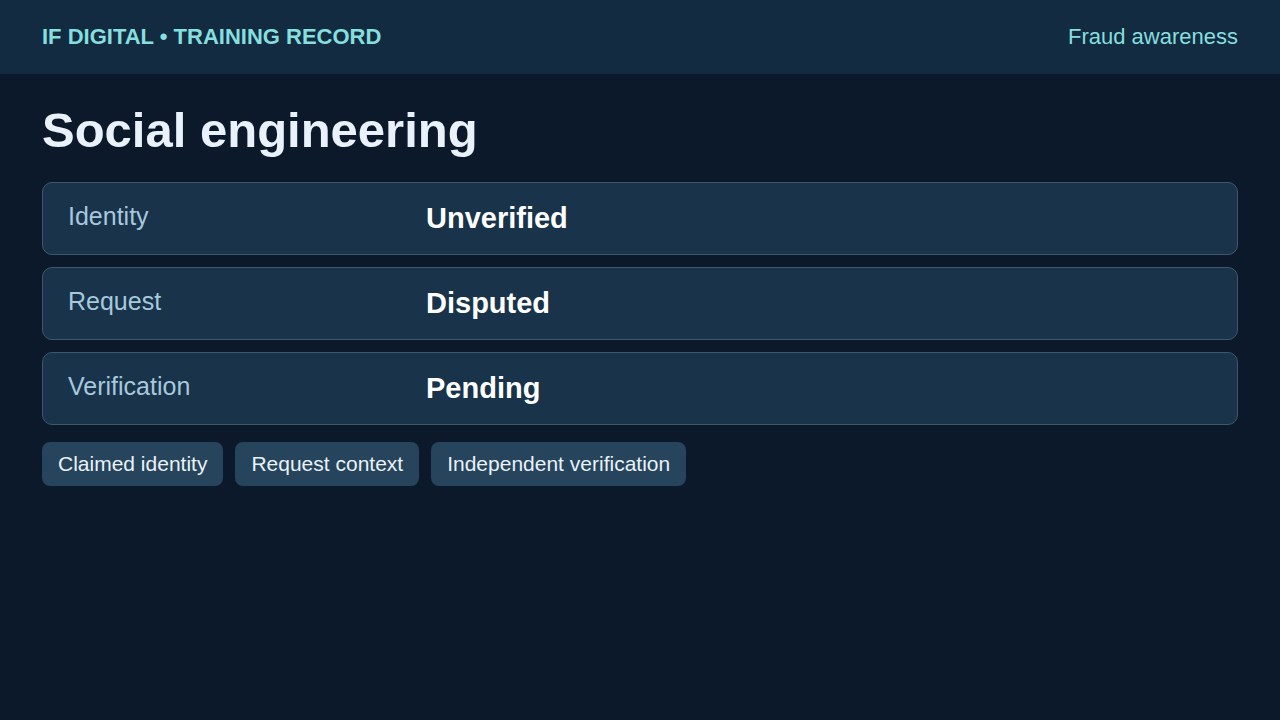
Social engineering
Recognise deception and pressure as factors in disputed decisions.
See what you will learn →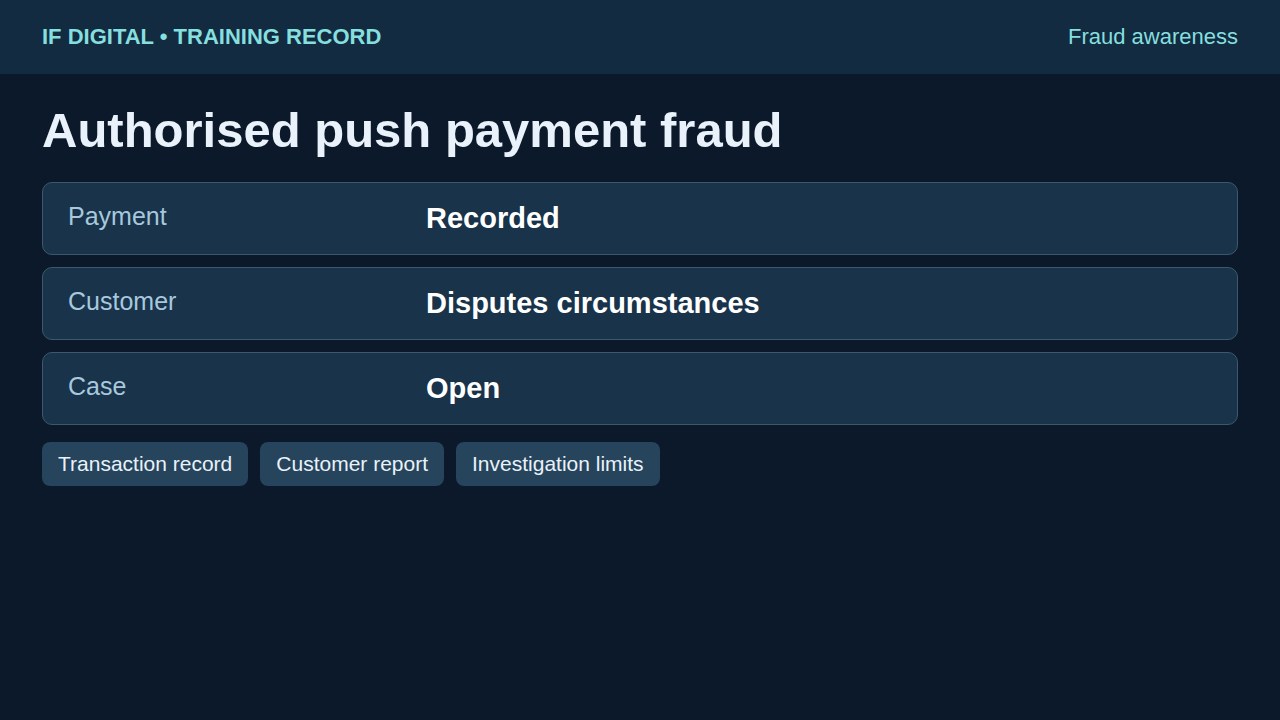
Authorised push payment fraud
Understand the difference between a disputed payment authorised by the customer and an unauthorised transaction.
See what you will learn →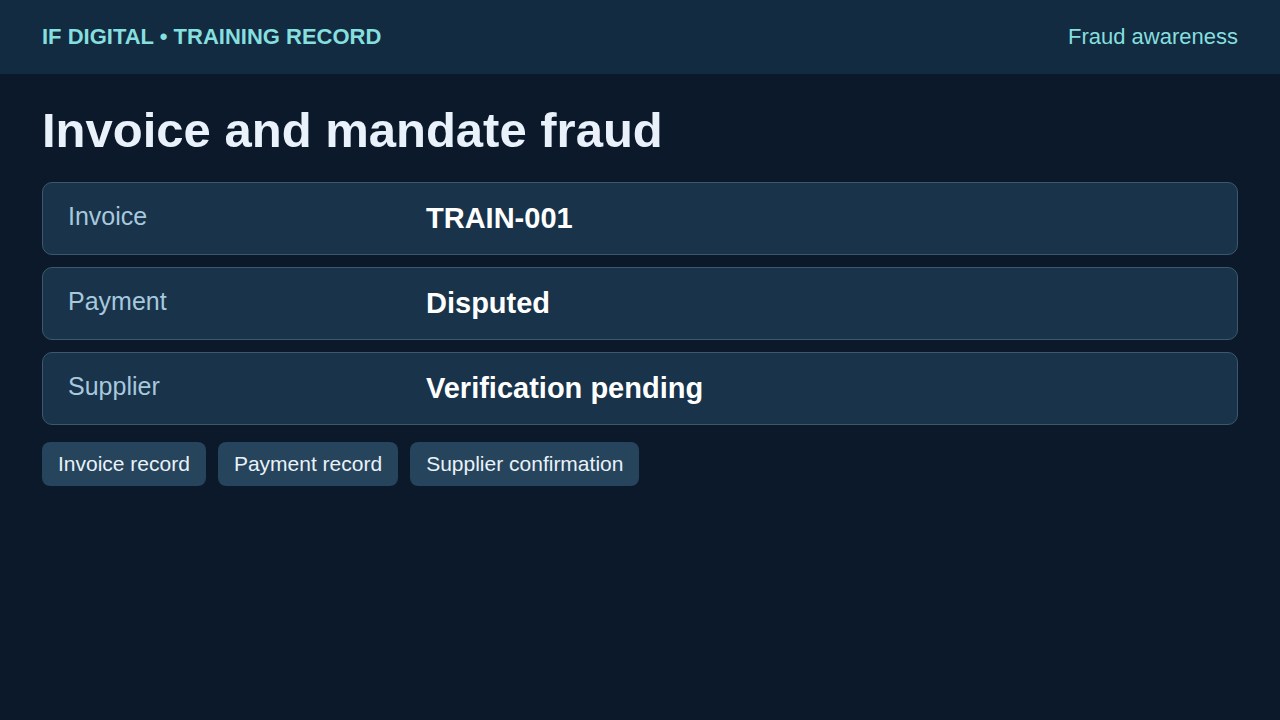
Invoice and mandate fraud
Compare a disputed payment record with independently verified supplier information.
See what you will learn →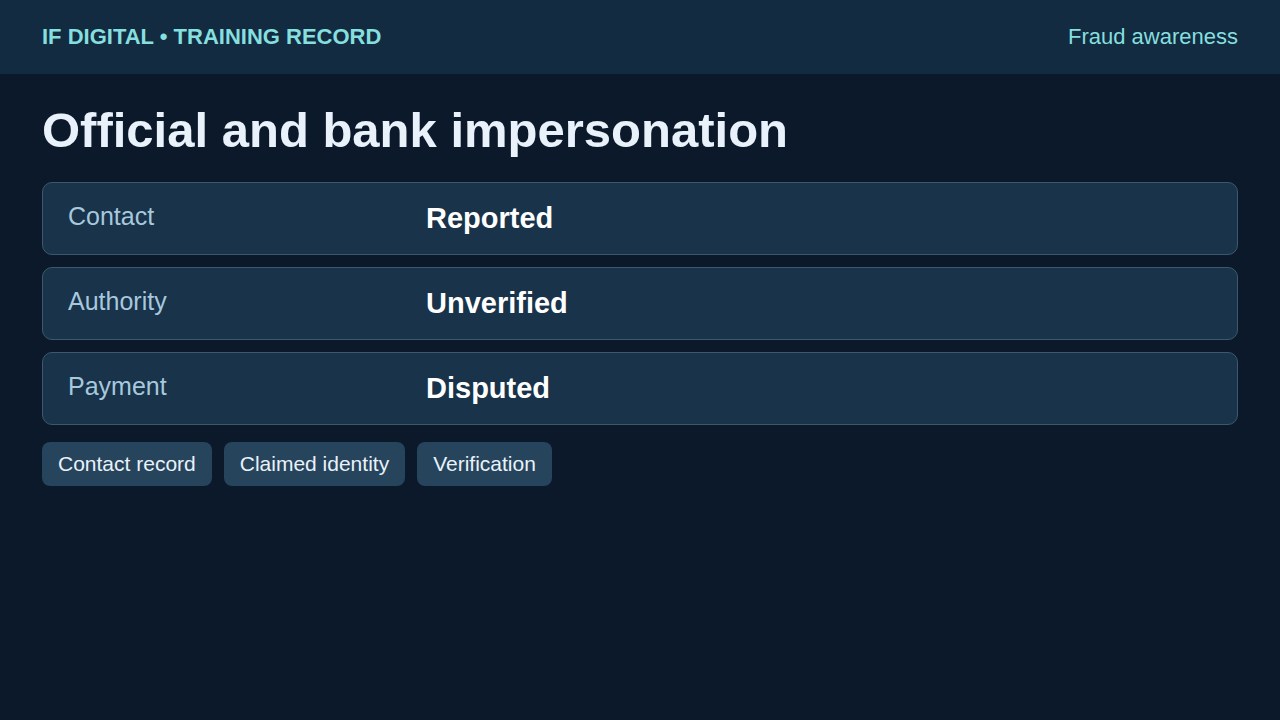
Official and bank impersonation
Recognise the difference between claimed authority and verified identity in a fraud investigation.
See what you will learn →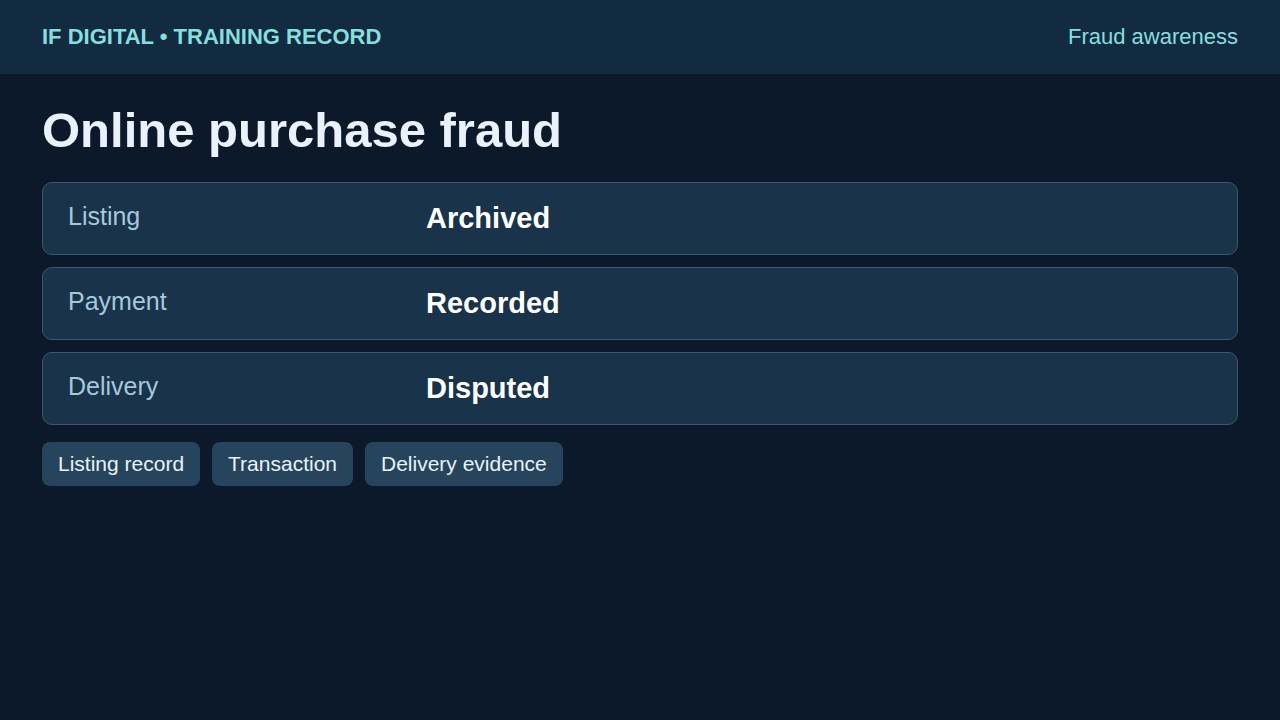
Online purchase fraud
Understand the records that distinguish a listing, payment and delivery.
See what you will learn →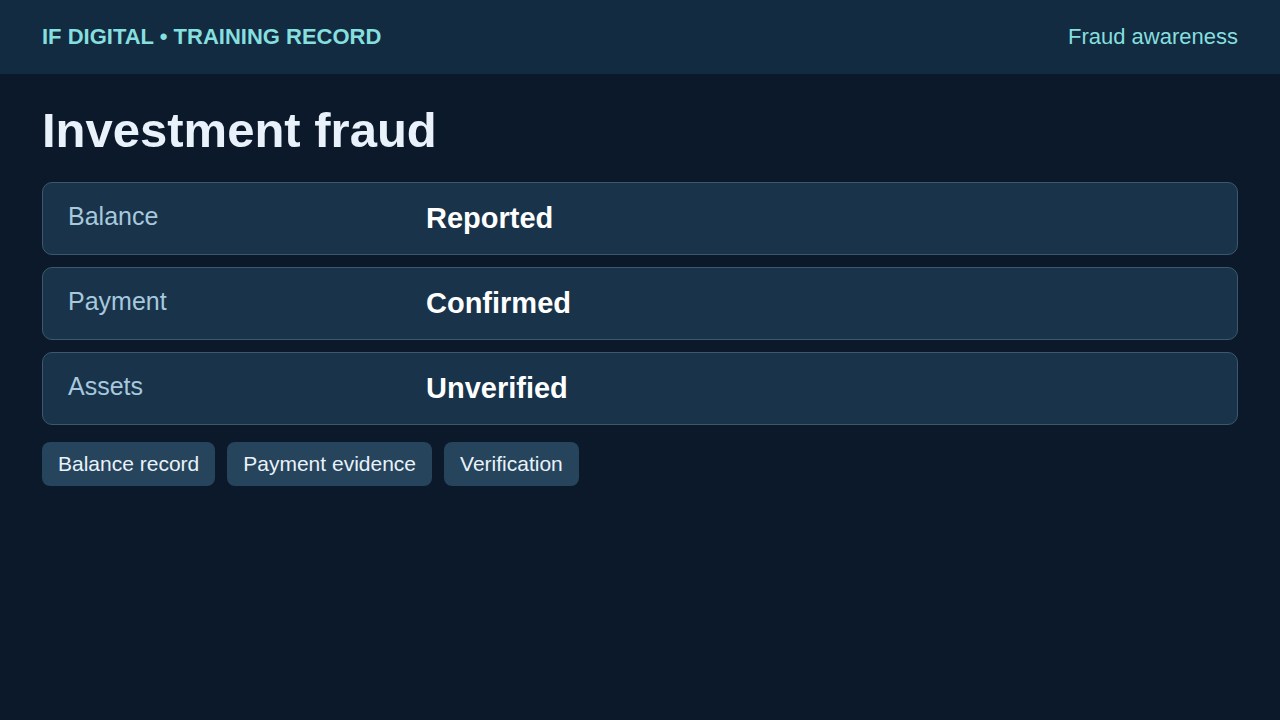
Investment fraud
Distinguish a displayed investment balance from independently verified assets.
See what you will learn →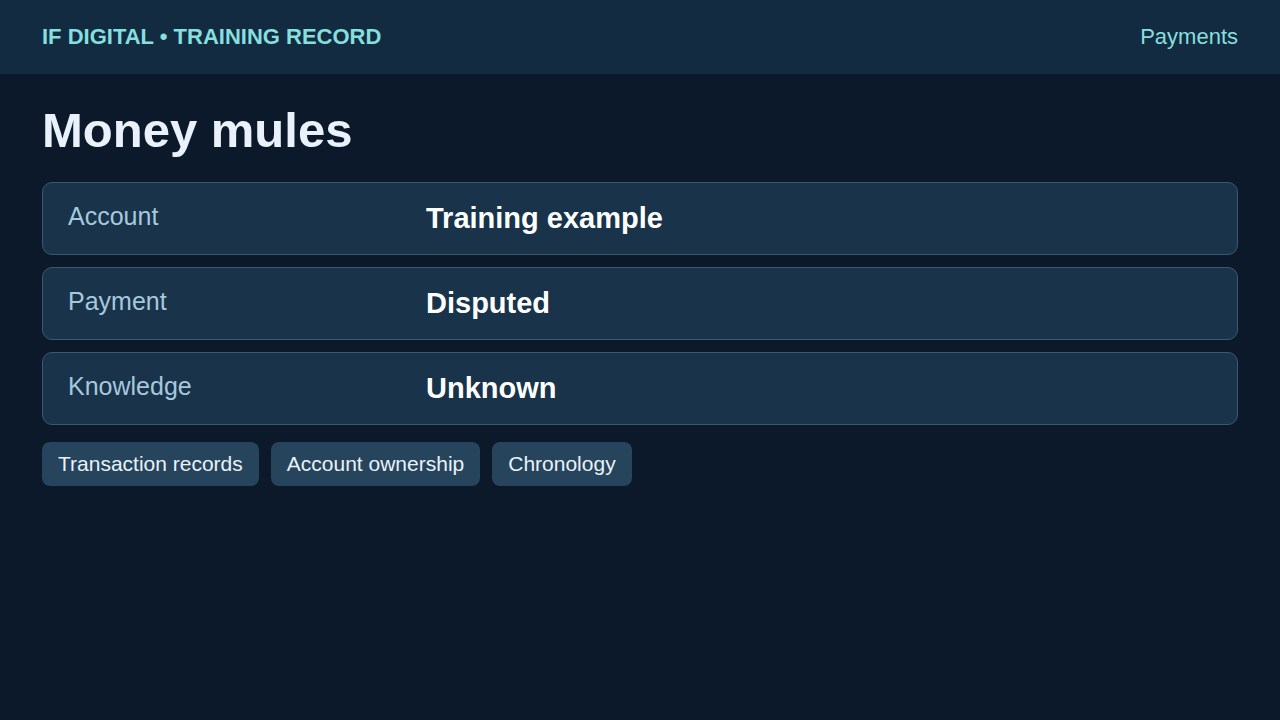
Money mules
Recognise intermediary account records and why receipt of funds alone does not establish intent.
See what you will learn →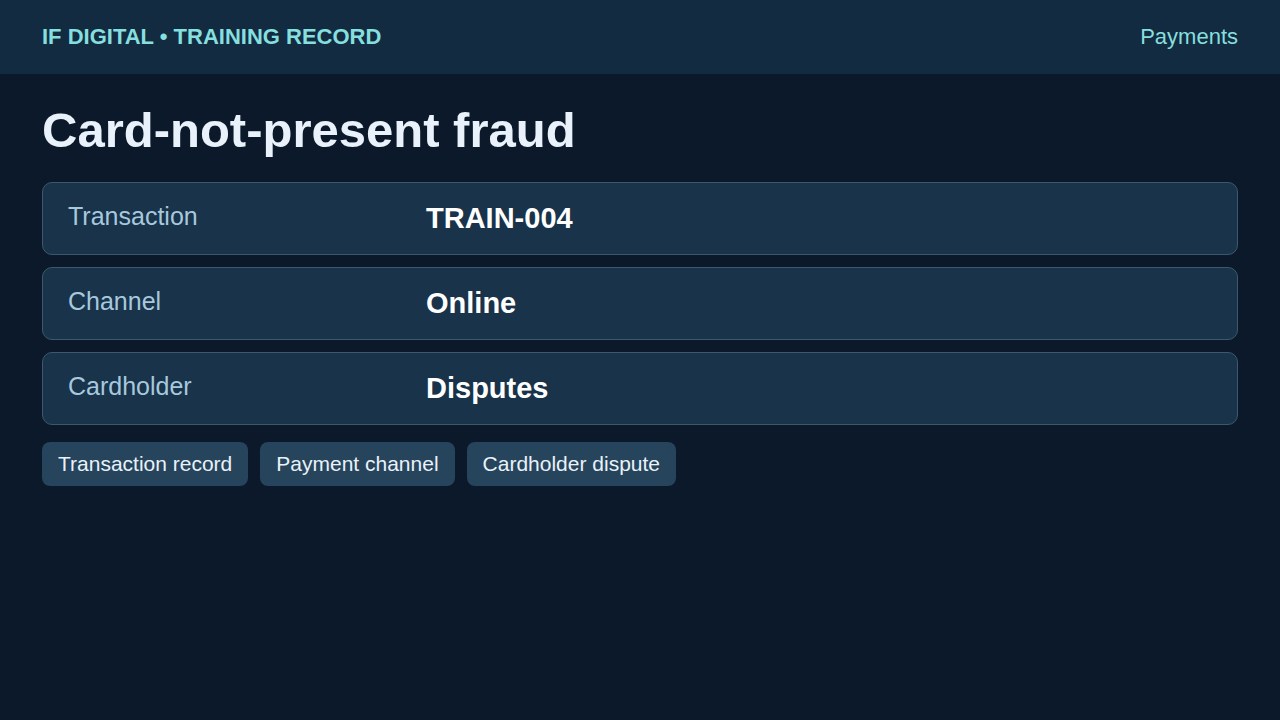
Card-not-present fraud
Understand why a successful remote card payment does not establish who made the purchase.
See what you will learn →
Identity fraud
Recognise identity discrepancies and the need for independent verification.
See what you will learn →
Account compromise
Understand the records that can corroborate a disputed account access event.
See what you will learn →
SIM changes and account recovery
Recognise provider records of a SIM change and correlate them with account recovery events.
See what you will learn →Nothing matches that search yet. More demonstrations are being added as they are approved.
This catalogue previews planned topics, not a promise of finished videos. More demonstrations will be added as footage is approved. Browse the practical activities.